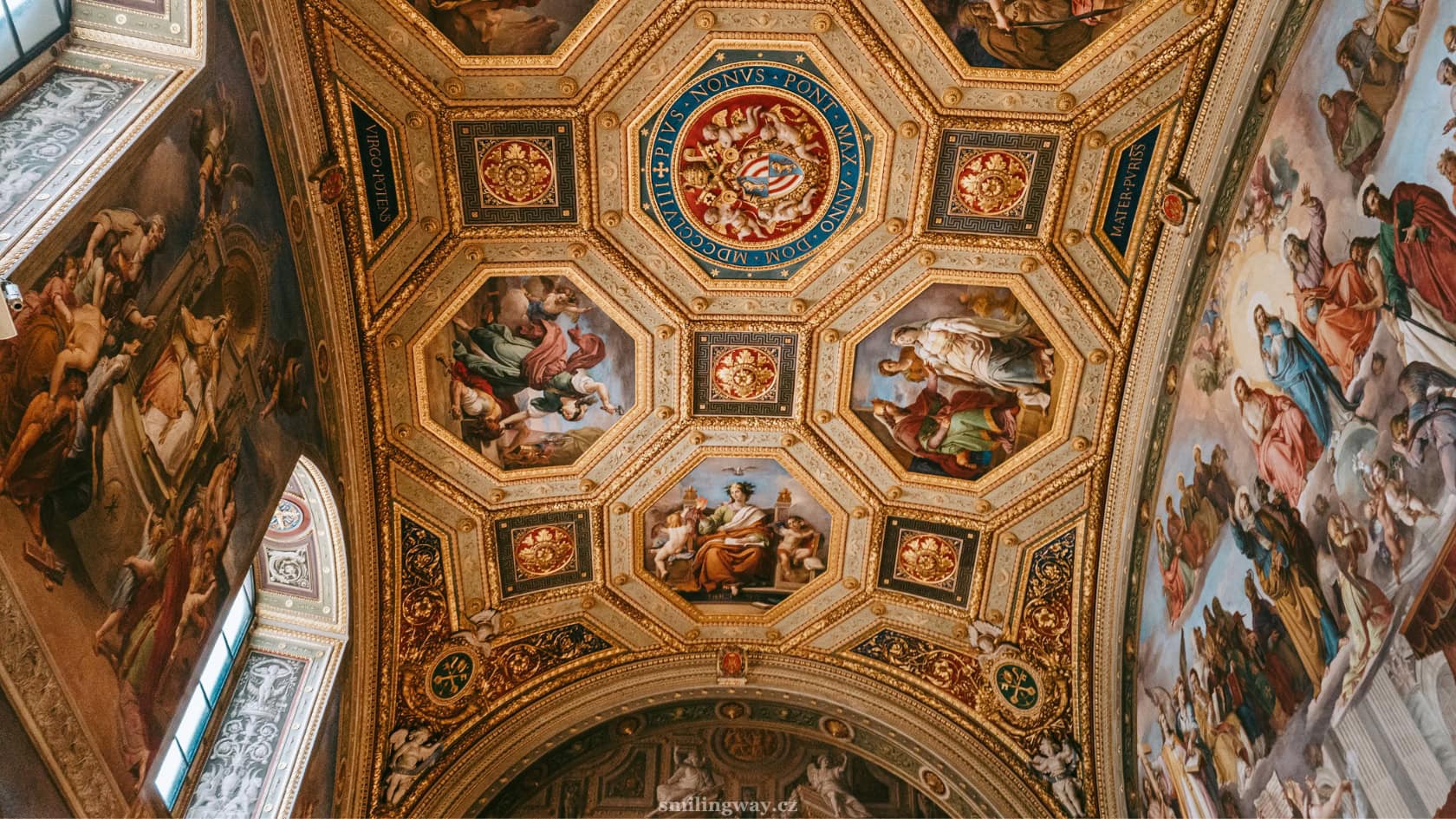
In Rome, history is around every corner — and there’s no better place to experience it than in its museums. From the Etruscans and the age of antiquity to the Renaissance and modern times, Rome’s collections walk you through centuries of stories in one place.
Here are 10 of the best museums in Rome to add to your itinerary.
- Which Museums in Rome Are Worth Visiting?
- Vatican Museums & the Sistine Chapel
- Capitoline Museums
- Borghese Gallery
- National Roman Museum
- Trajan’s Forum – Museo dei Fori Imperiali
- Castel Sant’Angelo (The Mausoleum of Hadrian)
- National Etruscan Museum of Villa Giulia (Museo Nazionale Etrusco di Villa Giulia)
- National Gallery of Ancient Art (Galleria Nazionale d’Arte Antica – Palazzo Barberini)
- National Gallery of Modern and Contemporary Art (Galleria Nazionale d’Arte Moderna – GNAM)
- MAXXI – National Museum of 21st-Century Arts (Museo Nazionale delle Arti del XXI Secolo)
- Where to Stay in Rome
- Museums in Rome – MAP
- More Information About Rome
Which Museums in Rome Are Worth Visiting?
Rome has 83 museums. Yes — eighty-three. You’d need several trips to see them all.
Let’s be honest — not every museum is worth your time. So today, let’s focus on the museums that truly stand out — the ones that will inspire, entertain, and stay with you long after your visit.
There’s a little of everything — so everyone can find a favourite: from lovers of ancient Rome (that’s us 😊) to those who prefer more modern periods such as Neoclassicism or Surrealism.
Useful Information Before Your Trip
- Top experiences in Rome: Colosseum, Roman Forum, Vatican, Trevi Fountain, Pantheon
- How to save on transport and entry fees: Roma Pass is a city card that gives you unlimited public transport and free or discounted entry to major attractions in Rome.
- Where to stay:
- H10 Palazzo Galla (4-star hotel with a beautiful rooftop view)
- Hotel Hive (modern hotel at a good price)
- Hotel Impero (affordable hotel with easy access)
- How to get around the city: Rome has an extensive network of metro lines, buses and trams. You can pay for tickets with a contactless debit/credit card or buy them from ticket machines. Public transport is included if you use the Roma Pass.
Vatican Museums & the Sistine Chapel
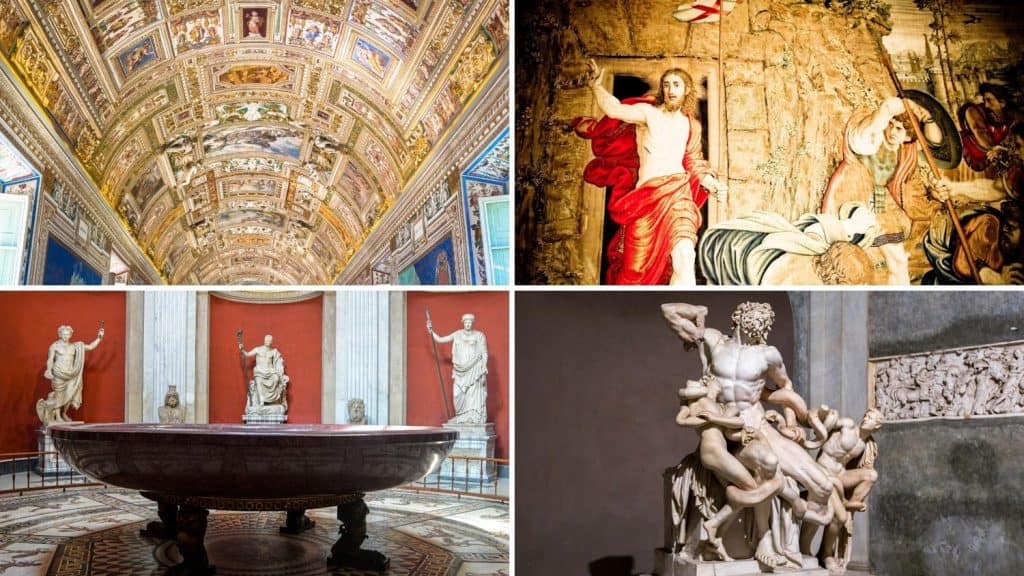
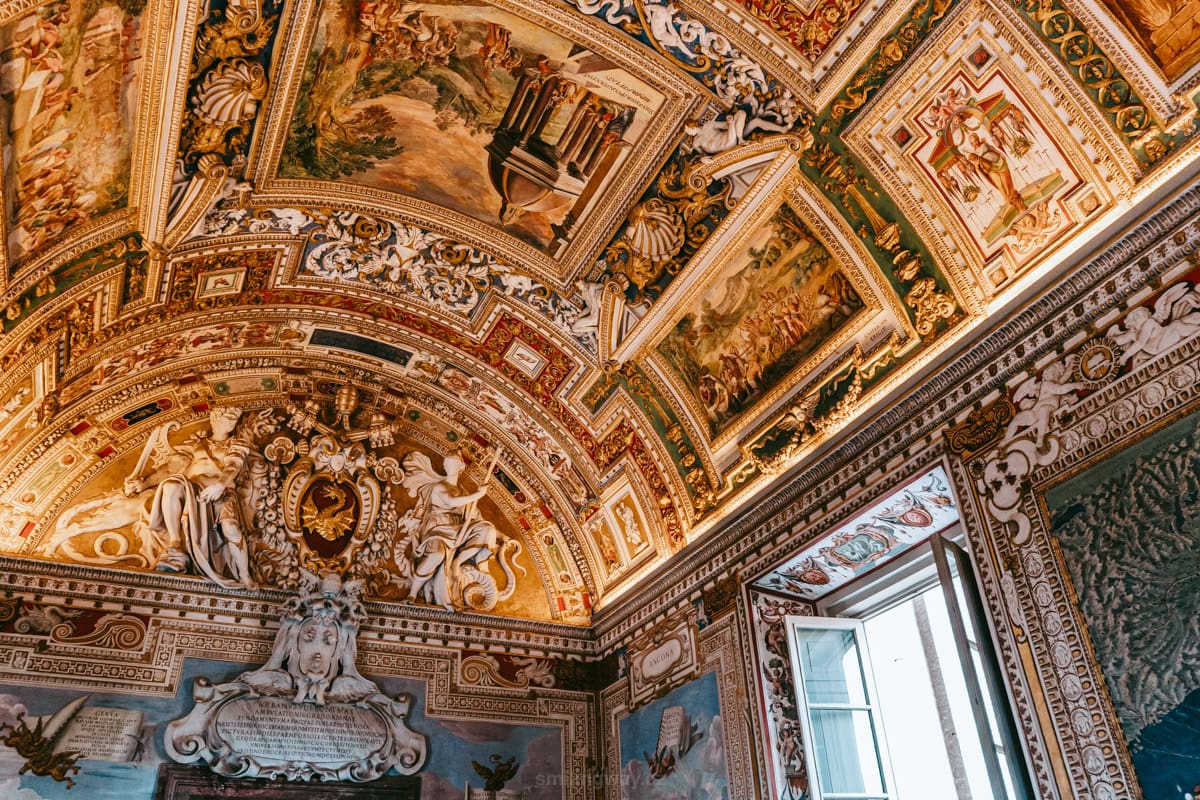
The Vatican Museums are among the largest museums in the world, with more than 20,000 pieces on display — a collection built up by popes over centuries. And that’s only a fraction of what exists; most of the artworks are not on view at all.
In 2024, the Vatican Museums became the third most visited art museum in the world. They impress with their Roman sculptures, Renaissance masterpieces and an overwhelming sense of history.
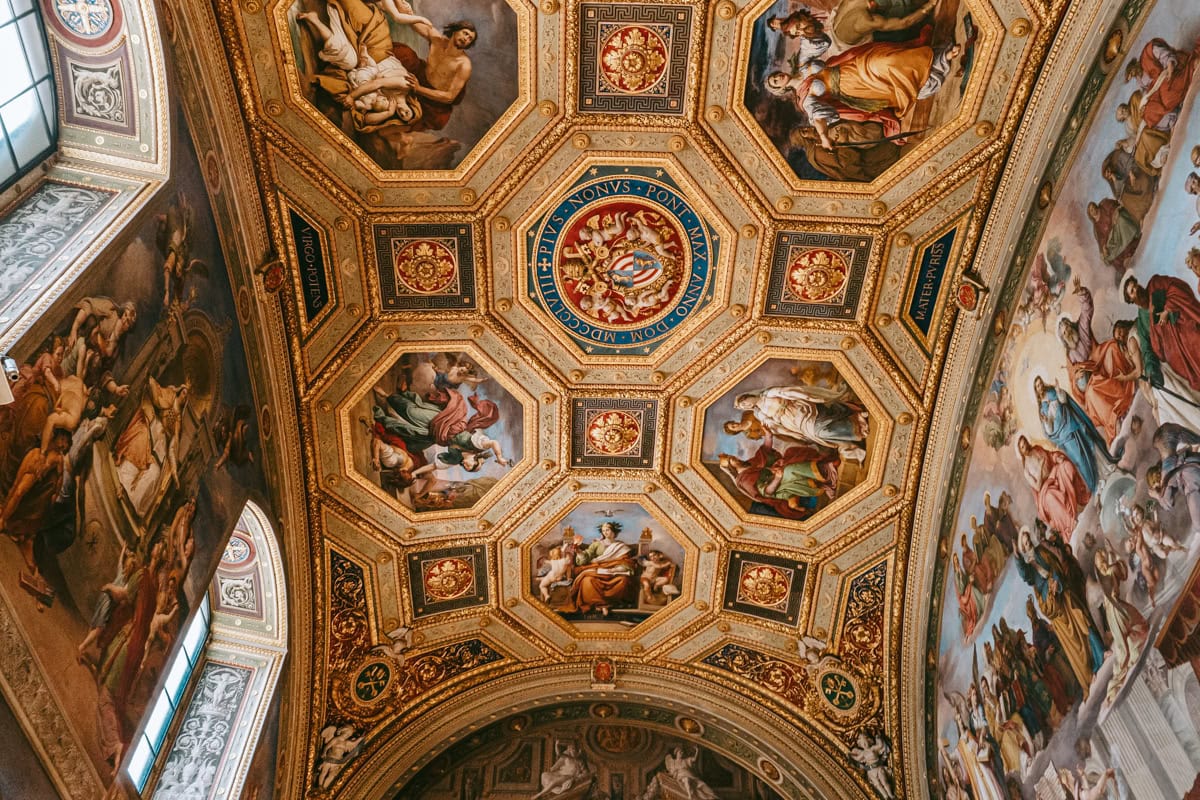
How to skip the lines: We booked our Vatican Museums & Sistine Chapel tickets online well in advance, as they sell out early. On the day of the visit, we used the middle entrance reserved for visitors with advance reservations.
The entire museum complex is housed in the Palazzo Apostolico, a vast network of galleries connected by kilometres of corridors. A visit usually takes 2 to 3 hours, but keep in mind that it’s impossible to carefully study every piece — the collection is simply too extensive.
So what shouldn’t you miss?
- the Gallery of Maps, lined with beautifully painted topographical maps of Italy
- the Raphael Rooms, decorated with Raphael’s monumental frescoes
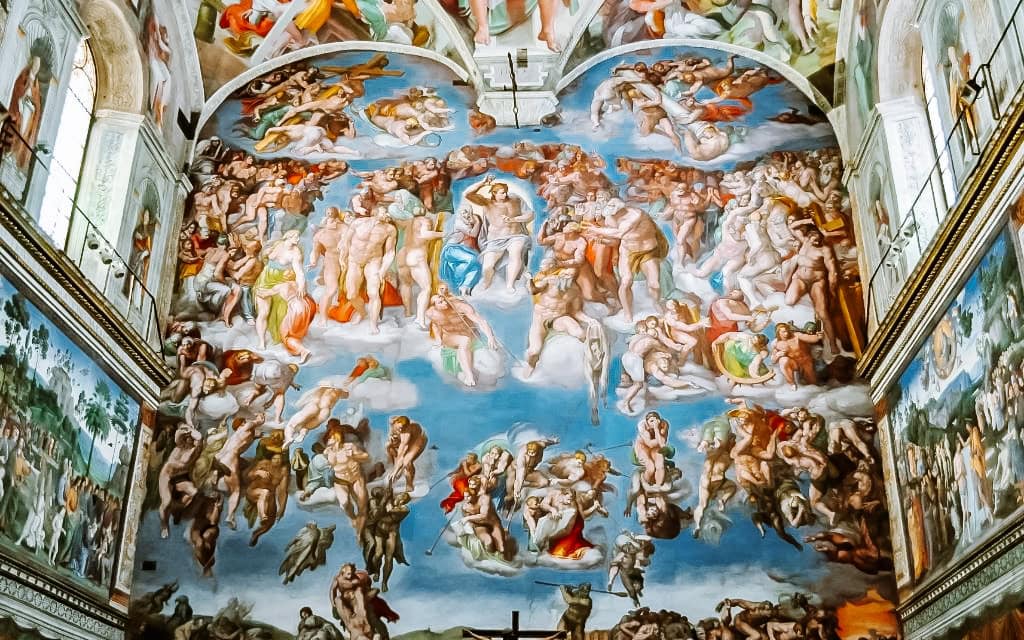
- and, of course, the Sistine Chapel, home to two of Michelangelo’s masterpieces:
- the famous ceiling depicting nine scenes from the Book of Genesis
- and The Last Judgment on the west wall, showing God casting judgment on the souls of the dead
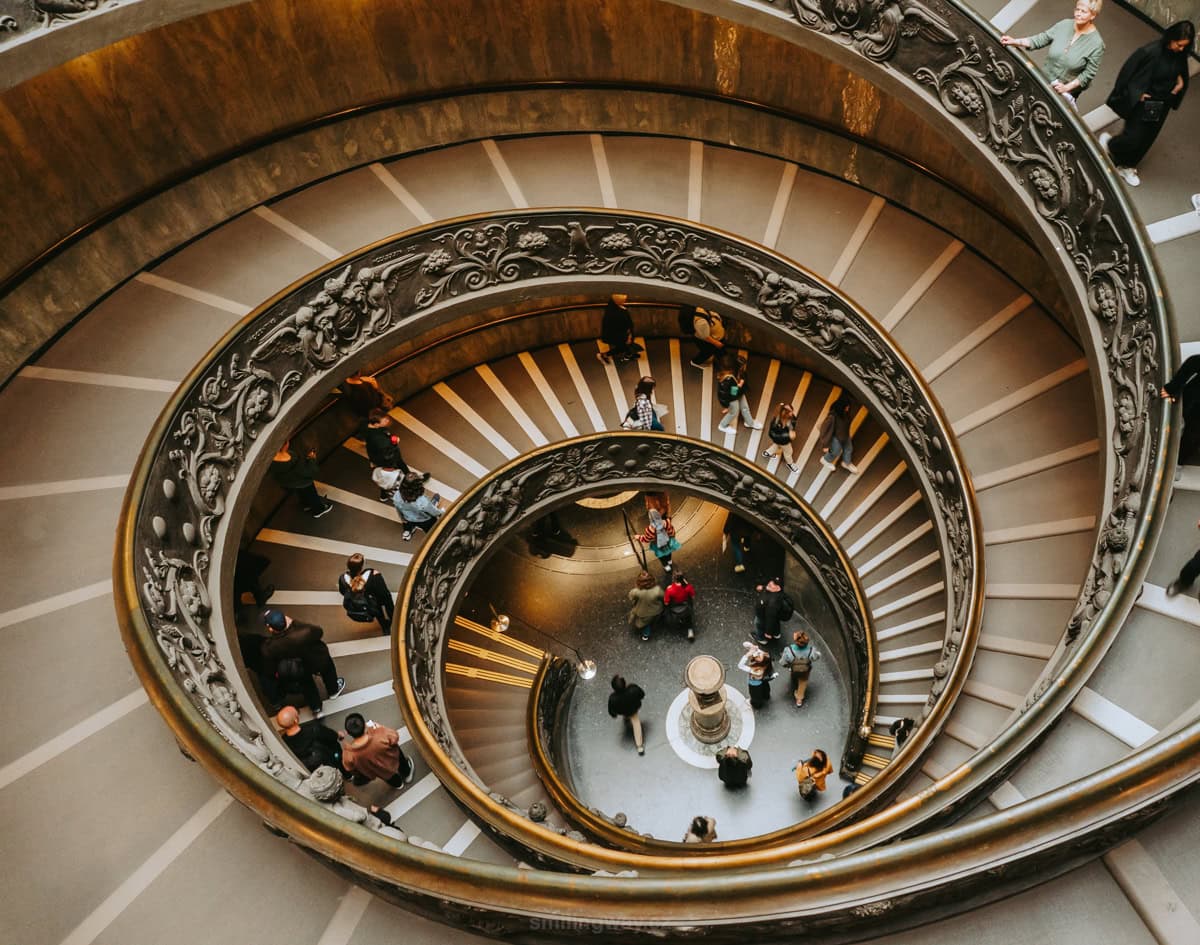
At the very end of the museum route, you’ll walk down the iconic spiral staircase — one of the most photographed spots in the entire complex.
Crowds are common in the Vatican Museums. The best times to visit are Tuesday and Thursday evenings, when there are noticeably fewer tourists.
- Where is it? Viale Vaticano 51, Vatican City
- How to get there? Metro line A → Cipro or Ottaviano
- Opening hours: Monday–Saturday 8:00–20:00 (last entry 18:00); last Sunday of the month 9:00–14:00 (last entry 12:30)
- Ticket price: Full price €20; reduced €8 (children 6–18 and students 19–26); free entry last Sunday of the month (no reservations — expect very large crowds)
- Reservation: Yes; reservation fee applies
- Included in the Rome & Vatican Pass: Yes
Vatican Museums Tickets Reservation
See the current availability of Vatican Museums tickets below:
Capitoline Museums
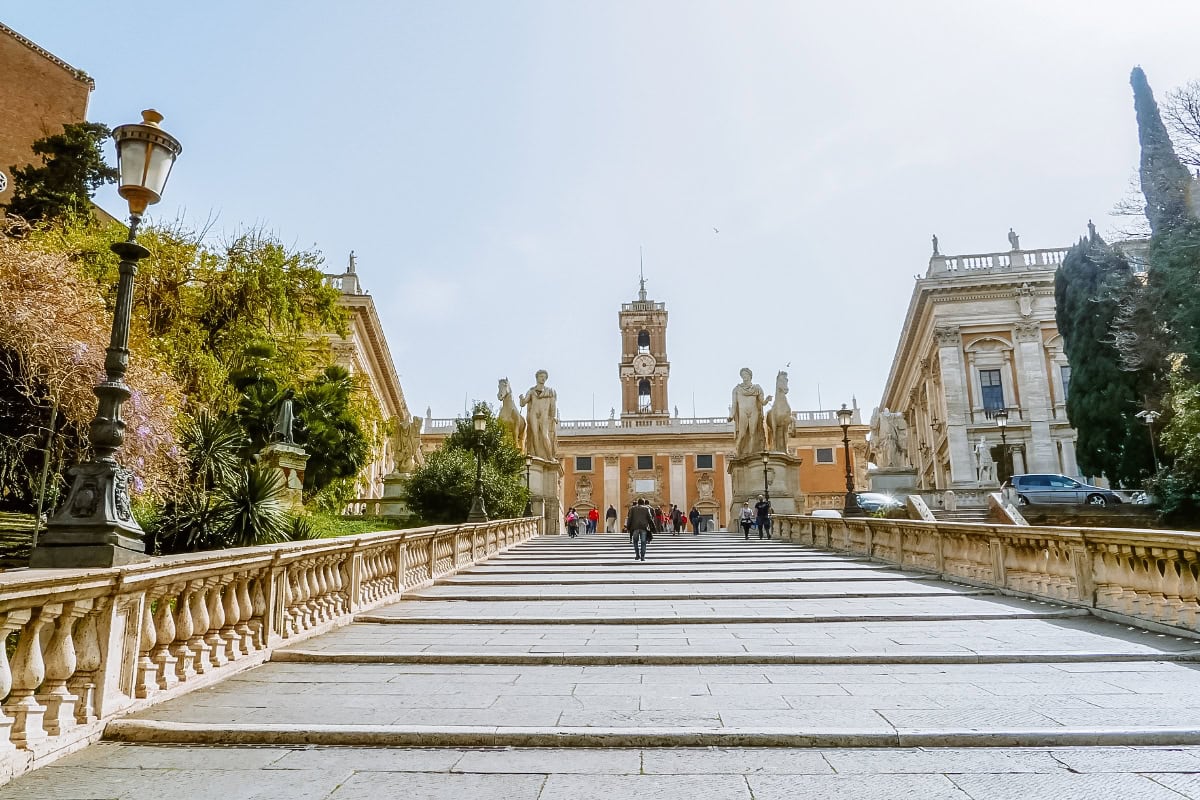
On the small, perfectly oval Piazza del Campidoglio you’ll find Rome’s city hall and the Capitoline Museums — the oldest public museum in the world.
The museums occupy two of the three palaces on the square, connected by an underground corridor (the third building is the Roman city hall, Palazzo Senatorio).
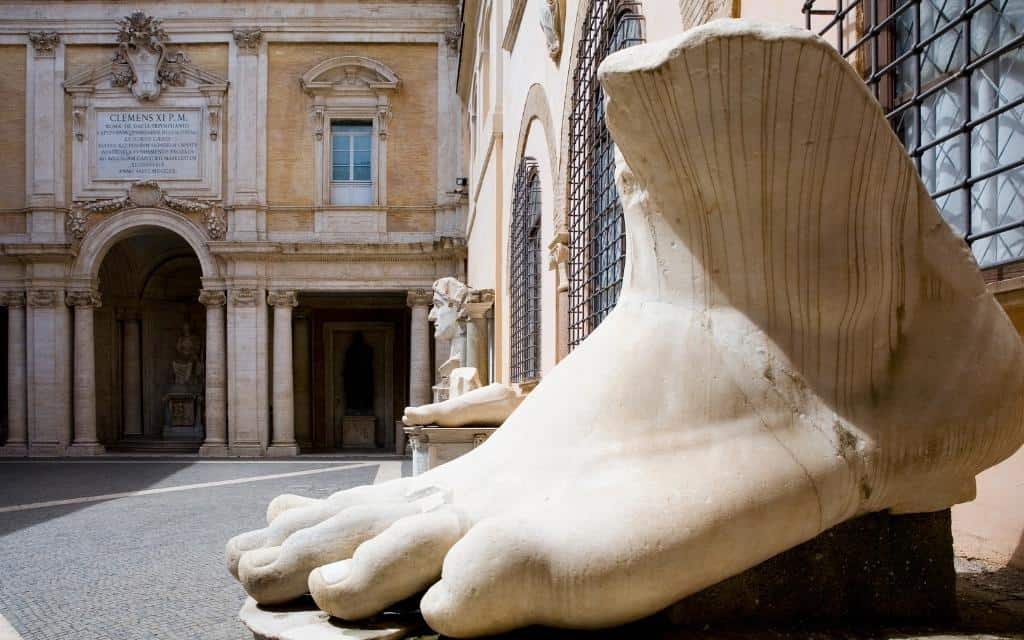
Your visit begins in the Palazzo dei Conservatori, where the courtyard displays the massive marble body parts from the colossal statue of Constantine, originally from the Roman Forum. Upstairs, don’t miss the bronze Capitoline Wolf, and on the second floor the picture gallery featuring works by Caravaggio, Titian and Rubens.
The Capitoline Museums walk you through the story of Rome from antiquity to the Renaissance. Together with the Vatican Museums and the Borghese Gallery, they’re a must-visit for anyone who loves art and history.
Piazza del Campidoglio sits on the Capitoline Hill, offering some of the best views over ancient Rome — especially toward the Roman Forum and the distant Colosseum. In ancient times, Romans had a temple here; later, Michelangelo redesigned the entire square into its current layout.
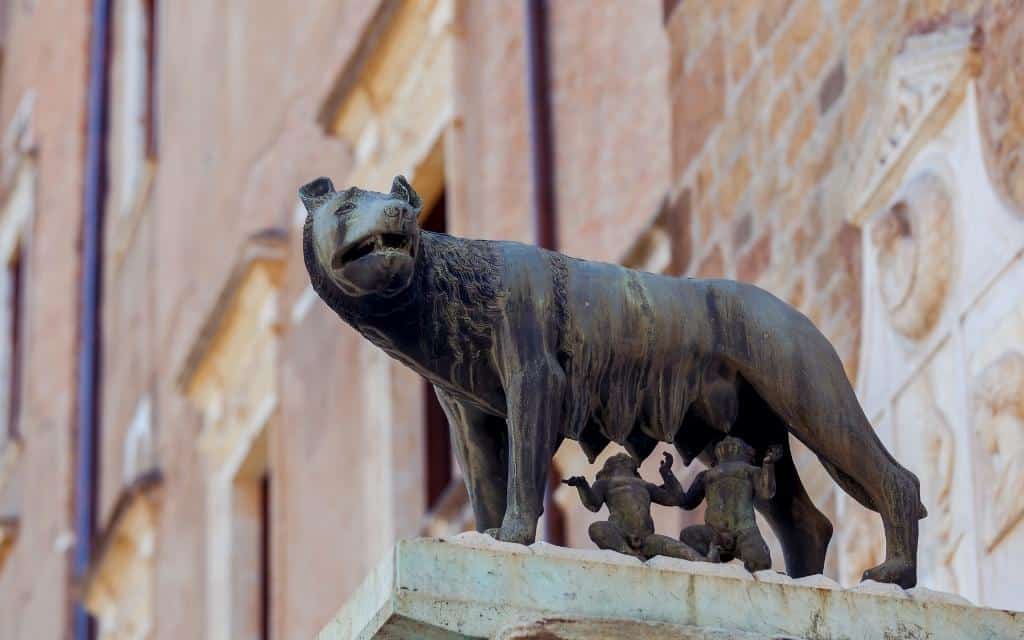
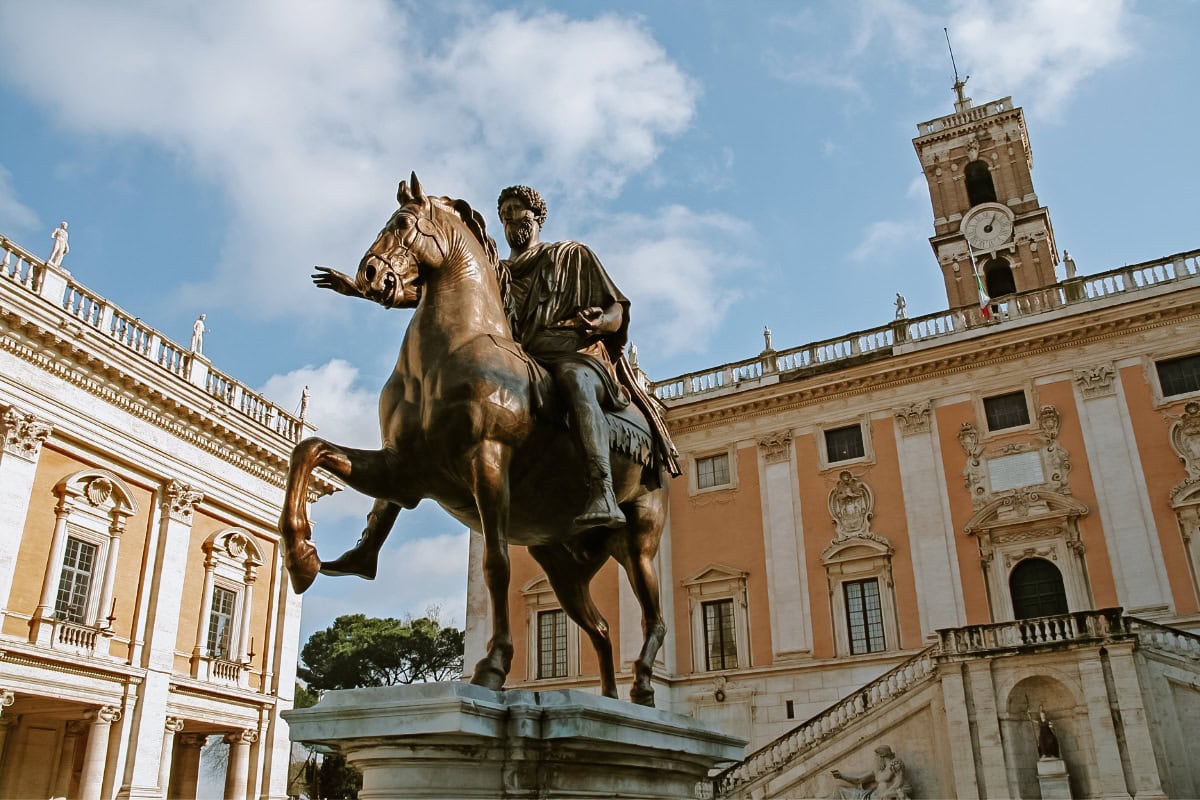
At the centre of the piazza stands the equestrian statue of Emperor Marcus Aurelius — a copy. The original is housed inside the Capitoline Museums.
- Where is it? Piazza del Campidoglio
How to get there? 1 km from Colosseo metro station (line B)
Opening hours: 9:30–19:30 (last entry 1 hr before closing)
Ticket price: Full €15; reduced €9.50 (for everyone aged 6–25)
Reservation: Not required
Included in the Roma Pass: Yes
Borghese Gallery
The Borghese Gallery is located inside Villa Borghese, the park often called the green lungs of Rome. It’s a place to slow down, rent a bike, enjoy the views over the city and treat yourself to something good.
And then you step inside the gallery — and it’s impossible not to be amazed.
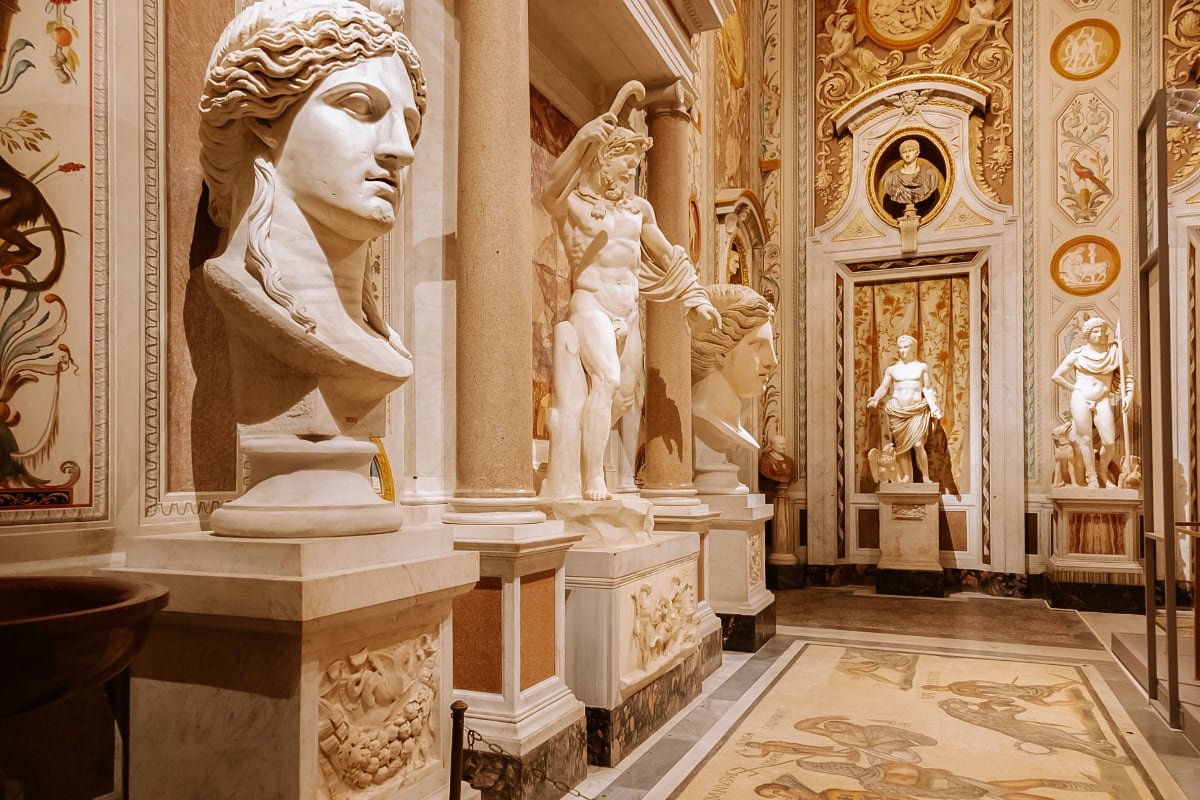
The collection here is one of the finest in the world, spanning sculpture, painting and architecture. It was created in the 17th century by Cardinal Scipione Borghese, who built this villa specifically to protect his artworks. That’s why the gallery is often called the queen of all private art collections.
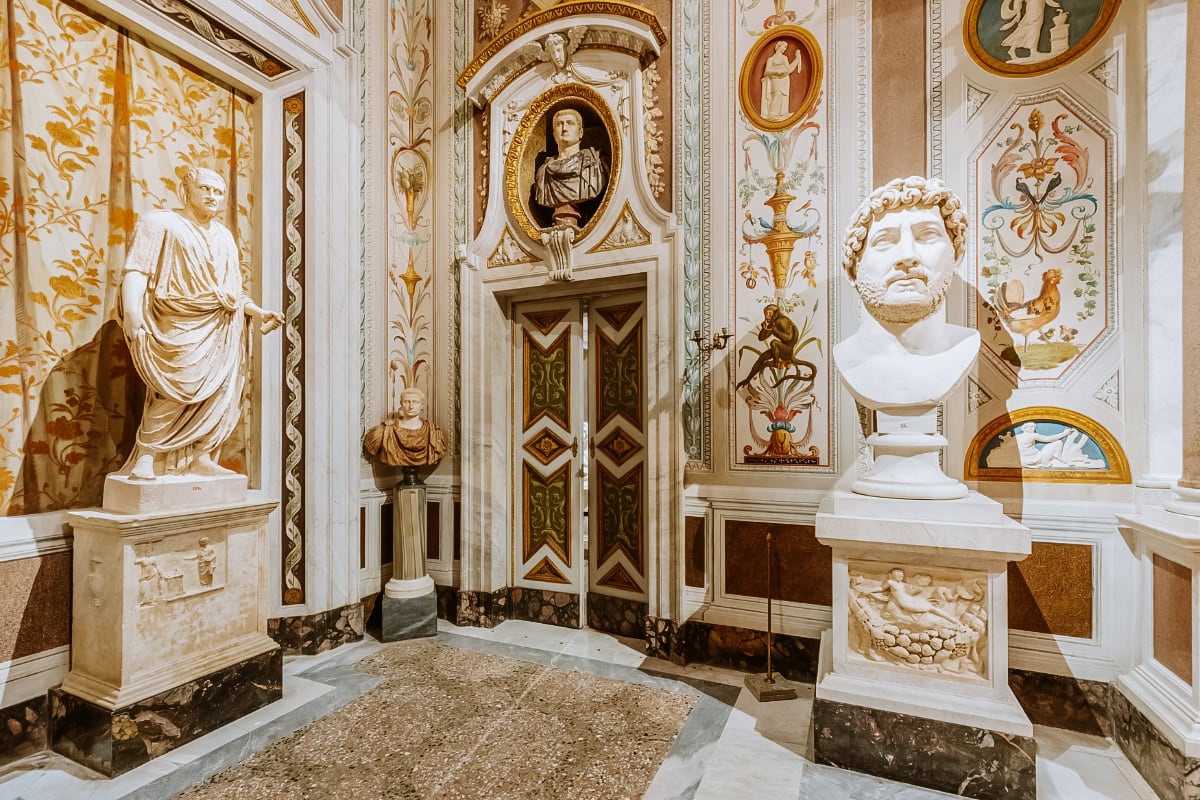
The Borghese Gallery captivates with its floor mosaics of gladiators, ancient Roman sculptures, Egyptian pieces, Renaissance paintings by Raphael, Caravaggio and Titian, and some of Bernini’s most famous sculptures.
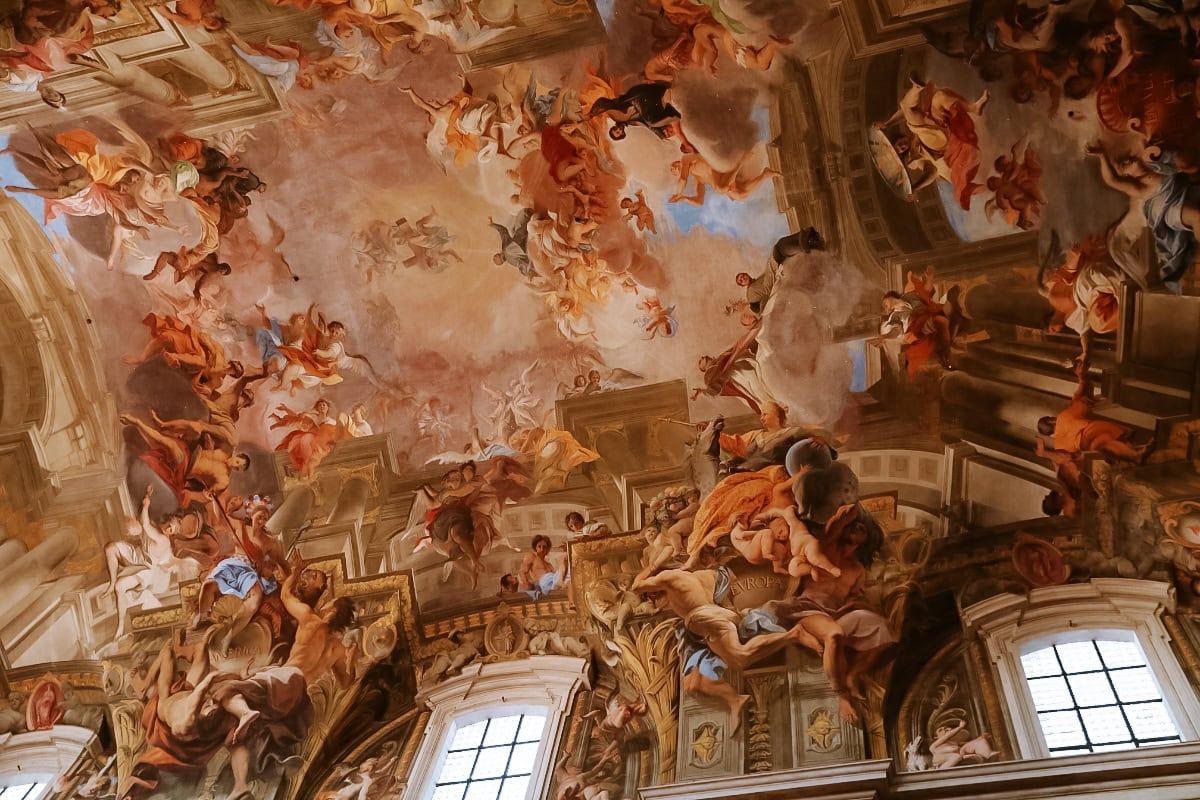
Because only a limited number of visitors are allowed inside at a time, the gallery never feels overcrowded.
- Where is it? Piazzale del Museo Borghese 5
- How to get there? Metro line A → Piazza di Spagna; buses 5, 19, 52, 53, 63, 86, 88, 92, 95, 116, 204, 217, 231, 360, 490, 491, 495, 630, 910, 926
- Opening hours: Closed Monday; Tue, Fri & Sat 9:00–19:00; Wed 9:00–22:00; Thu 9:00–21:00 (you choose a specific time slot when booking)
- Ticket price: Full €17; reduced €4 (EU citizens 18–25); €2 reservation fee (applies also to free tickets for children under 18)
- Free entry: First Sunday of each month — reservation required
- Reservation: Yes (steps below)
- Included in the Roma Pass: Yes
Just like many major sites in Rome, you must reserve your spot for the Borghese Gallery. You have three options: by phone, by email or through the official website.
- You can send an email to [email protected] with the number of people, ages, the date of your visit and your preferred time slot. They usually reply within 48 hours.
- Or you can make your online reservation directly through the Borghese Gallery booking page.
Important: The Borghese Gallery often sells out well in advance — book early. You must arrive at least 30 minutes before your time slot. In the meantime, you can stroll through the gardens surrounding the villa. If the tickets are sold out, you can try your luck on a partner website, where additional spots sometimes appear.
Tip: Want to save money on entrance fees and public transport — or use just one card for everything? Check out the Roma Pass and the Rome & Vatican Pass, which offer free entry to many attractions, city transport and rides on the hop-on hop-off bus.
National Roman Museum
The National Roman Museum is divided into four main collections, each housed in a different historic palace. You buy one combined ticket, which gives you access to all sites — and you have a full week to visit them.
Ticket Prices
- Combined ticket: €12 full; €8 reduced (EU citizens 18–25); €2 reservation fee
- Single-site ticket: €8 full; €2 reduced (EU citizens 18–25); €2 reservation fee
- Free entry: First Sunday of every month — reservations are not possible
National Roman Museum: Palazzo Massimo alle Terme
The Renaissance palace Palazzo Massimo is the main seat of the National Roman Museum. Its collection focuses on ancient Roman art, with the ground floor and first floor dedicated mostly to sculpture.
The real highlight awaits you on the second floor — breathtaking mosaics and garden frescoes that cover nearly the entire room and feel as if you’ve stepped into an ancient villa.
- Where is it? Largo di Villa Peretti 2
- How to get there? Metro line A → Repubblica or Termini; buses C, H, 16, 36, 38, 40, 64, 86, 92, 105, 157, 170, 175, 204, 217, 310, 360, 492, 590, 649, 714, 910
- Opening hours: Tue–Fri 14:00–19:45; Sat–Sun 10:30–19:45 (last entry 19:00)
- Ticket price: €12 (€8 reduced EU 18–25) with combined ticket; €8 (€2 reduced EU 18–25) with single ticket
- Free entry: First Sunday of the month — no advance reservations
- Reservation: Not required
- Included in the Roma Pass: Yes
National Roman Museum: Baths of Diocletian
The Baths of Diocletian, one of the historic seats of the National Roman Museum, stand just a short walk from Palazzo Massimo. In the 4th century, this was the largest and most impressive bath complex in ancient Rome, able to accommodate up to 3,000 people at once.
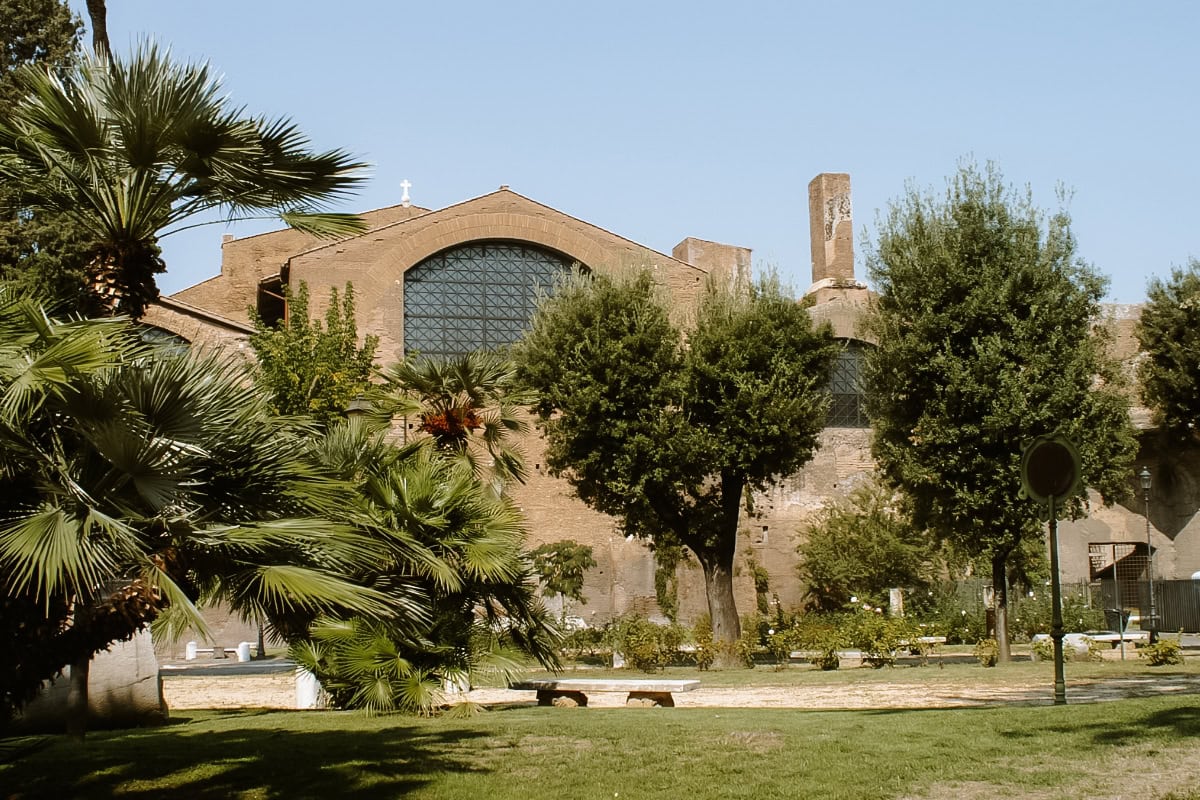
The main part of the museum focuses on an extensive collection of ancient Roman inscriptions and written texts. Don’t miss the church Santa Maria degli Angeli, designed by Michelangelo — he died a year later, and the basilica was completed by his student Jacopo Lo Duca.
Outside lies the beautiful Michelangelo Cloister, one of the largest in all of Italy.
- Where is it? Via del Circo Massimo
- How to get there? Metro line A or B → Termini; buses C2, H, 36, 38, 40, 64, 86, 90, 92, 105, 170, 175, 217, 310, 360, 714, 910
- Opening hours: Tue–Fri 14:00–19:45; Sat–Sun 10:30–19:45 (last entry 19:00)
- Ticket price: €12 (€8 reduced EU 18–25) with combined ticket; €8 (€2 reduced EU 18–25) with single ticket
- Free entry: First Sunday of every month — no advance reservations
- Reservation: Not required
- Included in the Roma Pass: Yes
Where to stay in Rome
Note: We only recommend services we personally use and trust.
National Roman Museum: Palazzo Altemps
The Palazzo Altemps is a beautifully decorated 15th-century palace near Piazza Navona. Here you’ll find some of the finest works of ancient sculpture, Egyptian collections, the famous Pallavicini Rospigliosi frescoes, and other important archaeological pieces.
- Where is it? Piazza S. Apollinare 46
- How to get there? Buses C3, 30, 70, 81, 87, 116, 130, 186, 492, 628
- Opening hours: Tue–Fri 14:00–19:45; Sat–Sun 10:30–19:45 (last entry 19:00)
- Ticket price: €12 (€8 reduced EU 18–25) with combined ticket; €8 (€2 reduced EU 18–25) with single ticket
- Free entry: First Sunday of every month — no advance reservations
- Reservation: Not required
- Included in the Roma Pass: Yes
National Roman Museum: Crypta Balbi
At Crypta Balbi, you step back into Rome’s past through archaeological excavations that reveal how this area was used from antiquity through the Middle Ages, the Renaissance and into modern times.
The museum also displays archaeological material from other digs and historical collections from various Roman museums.
- Where is it? Via delle Botteghe Oscure 31
- How to get there? Buses H, 30, 40, 46, 62, 63, 64, 70, 87, 119, 130, 186, 190, 271, 492, 571, 630, 780, 810, 916
- Opening hours: Tue–Fri 14:00–19:45; Sat–Sun 10:30–19:45 (last entry 19:00)
- Ticket price: €12 (€8 reduced EU 18–25) with combined ticket; €8 (€2 reduced EU 18–25) with single ticket
- Free entry: First Sunday of every month — no advance reservations
- Reservation: Not required
- Included in the Roma Pass: Yes
Trajan’s Forum – Museo dei Fori Imperiali
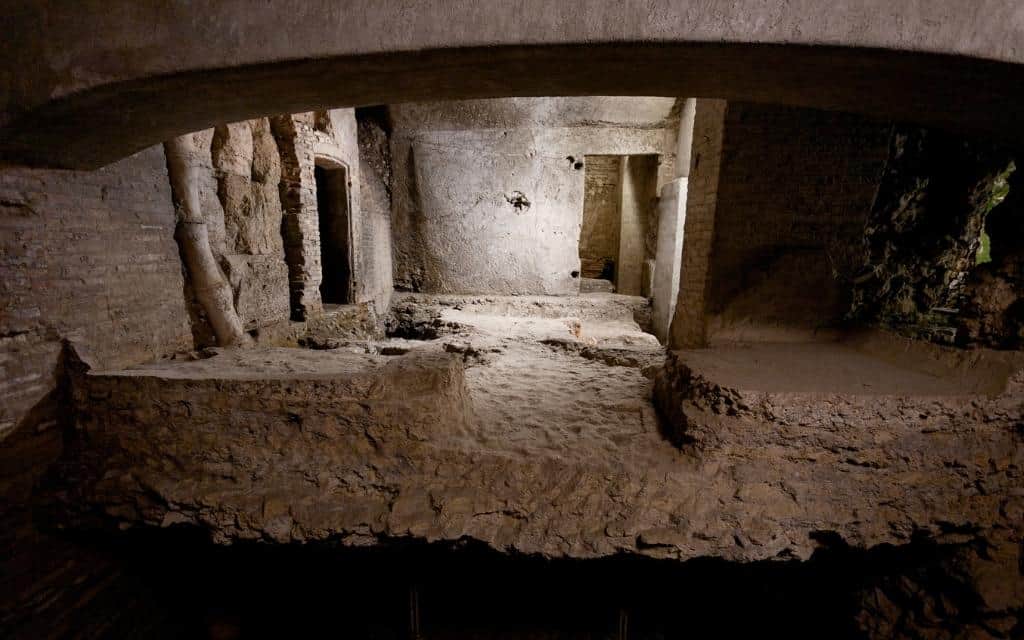
The Trajan Markets (Mercati di Traiano) on the slopes of the Quirinal Hill were the central complex of Trajan’s Forum, built in the early 2nd century. It was the last — and most impressive — of all the Imperial Forums.
For a long time, historians believed the markets served as an ancient shopping centre, but today experts think they were designed to house the administrative offices of the forum.
The museum focuses on the history and architecture of the Imperial Forums. But the real highlight is the building itself — a massive, three-level semicircular structure centred around the impressive Great Hall, which offers wonderful views of the surrounding forums.
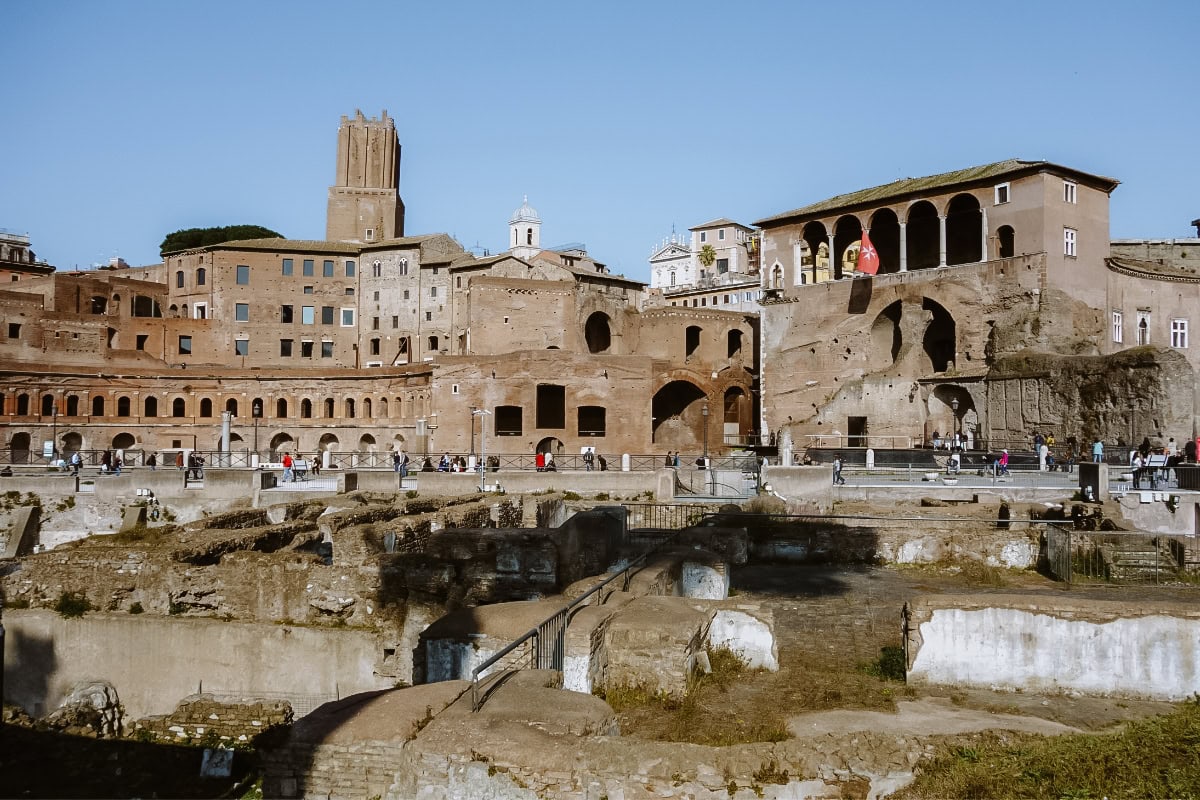
Even though the Trajan Markets aren’t as famous as the Colosseum, they’re absolutely worth a visit — especially considering how remarkably well-preserved they have remained over the centuries.
- Where is it? Via IV Novembre 94
- How to get there? Metro line B → Colosseo or Cavour; buses 40, 53, 60, 64, 70, 80, 85, 57, 117, 170, 175, 186, 271, 571, 810, H, N7, N8, N9, N15, N18 → Piazza Venezia
- Opening hours: Daily 9:30–19:30
- Ticket price: €15 full; €9.50 reduced (EU citizens 18–24)
- Reservation: No
- Included in the Roma Pass: Yes
Hotels in Rome with a pool
Note: We only recommend services we personally use and trust.
Castel Sant’Angelo (The Mausoleum of Hadrian)
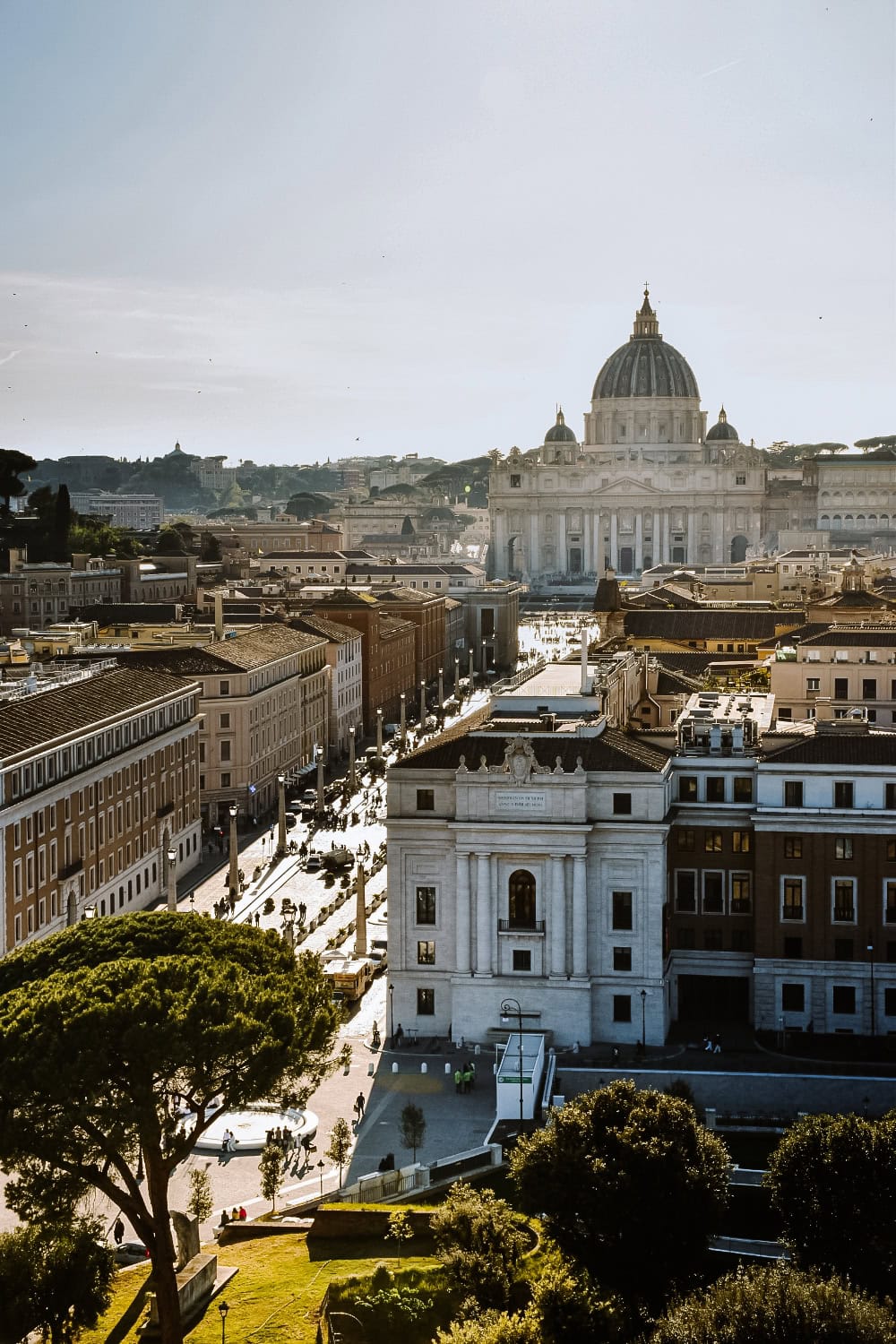
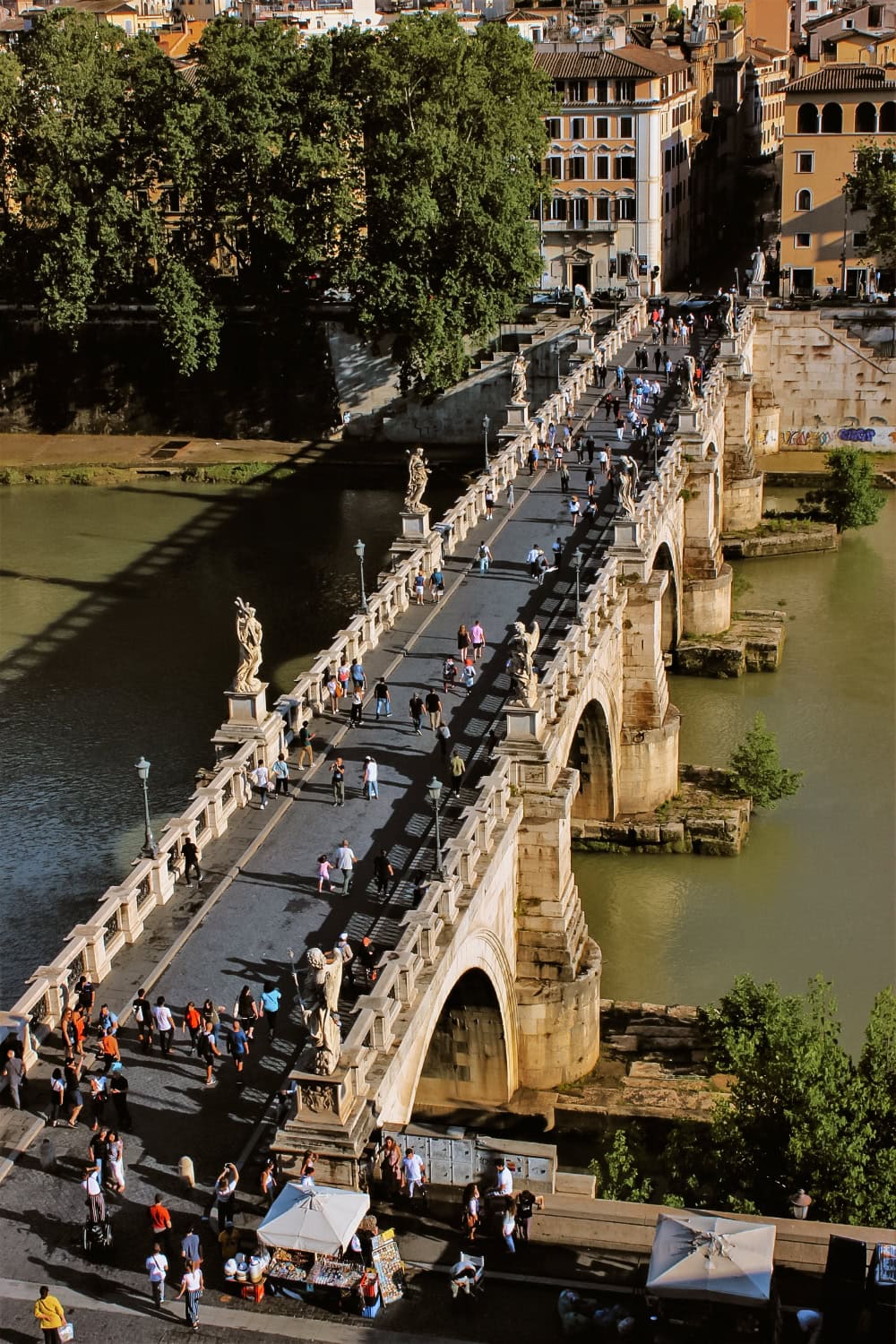
Just a short walk from the Vatican, perched on the right bank of the Tiber, stands Castel Sant’Angelo, also known as the Mausoleum of Hadrian. It’s one of the oldest monuments in Rome. Emperor Hadrian built it in 139 AD as his mausoleum. Later, the papacy fortified it and used it as a secure refuge.
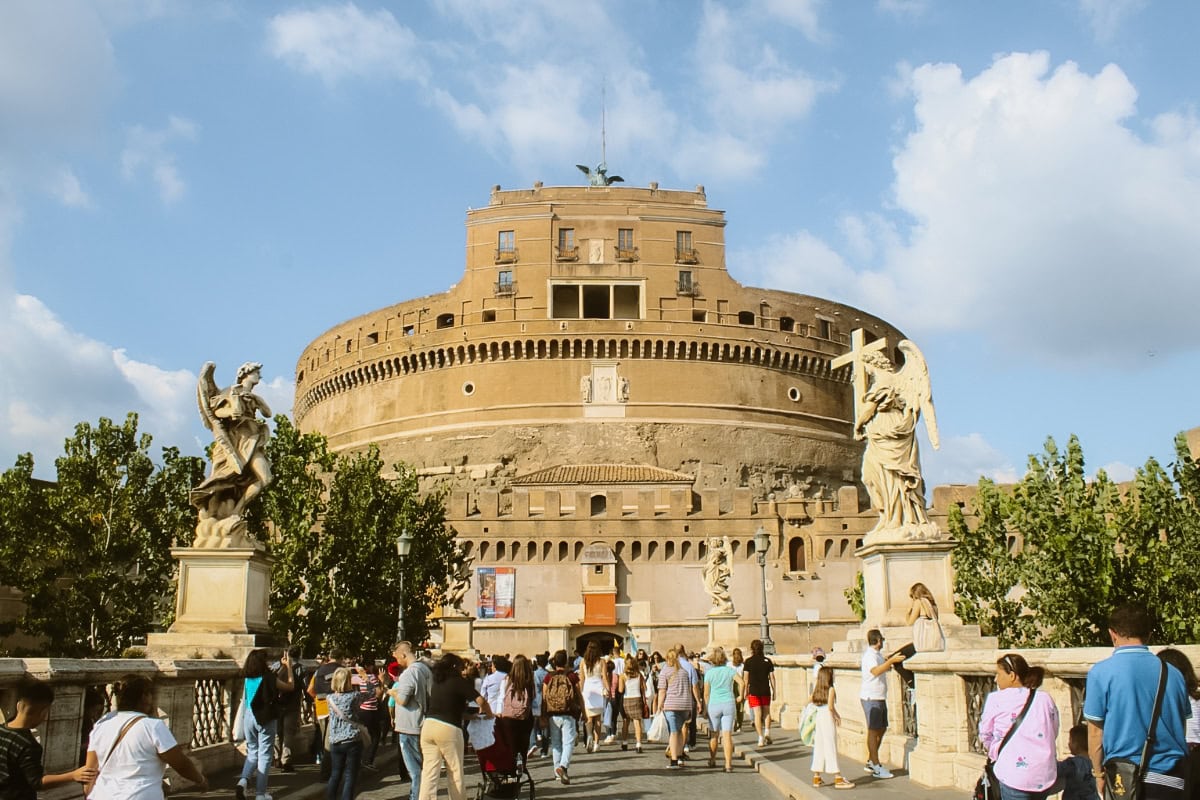
The castle gets its name from a vision of an angel seen here by Pope Gregory in 590 AD. Today, Castel Sant’Angelo is a popular museum where you can explore its long and turbulent history and admire the lavish papal apartments.
Don’t miss the Paolina Hall with its Renaissance frescoes and stunning views over Rome from the terrace.
- Where is it? Lungotevere Castello 50
- How to get there? Buses 23, 34, 49, 64, 87, 280, 492, 926, 990
- Opening hours: Tue–Sun 9:00–19:30 (ticket office closes at 18:30)
- Ticket price: €16 full; €3 reduced (EU citizens 18–24); free on the first Sunday of each month — reservations not possible
- Reservation: We booked in advance — queues can be up to an hour in season (April–October)
- Included in the Roma Pass: Yes (you can reserve with the Roma Pass, but it’s not mandatory)
National Etruscan Museum of Villa Giulia (Museo Nazionale Etrusco di Villa Giulia)
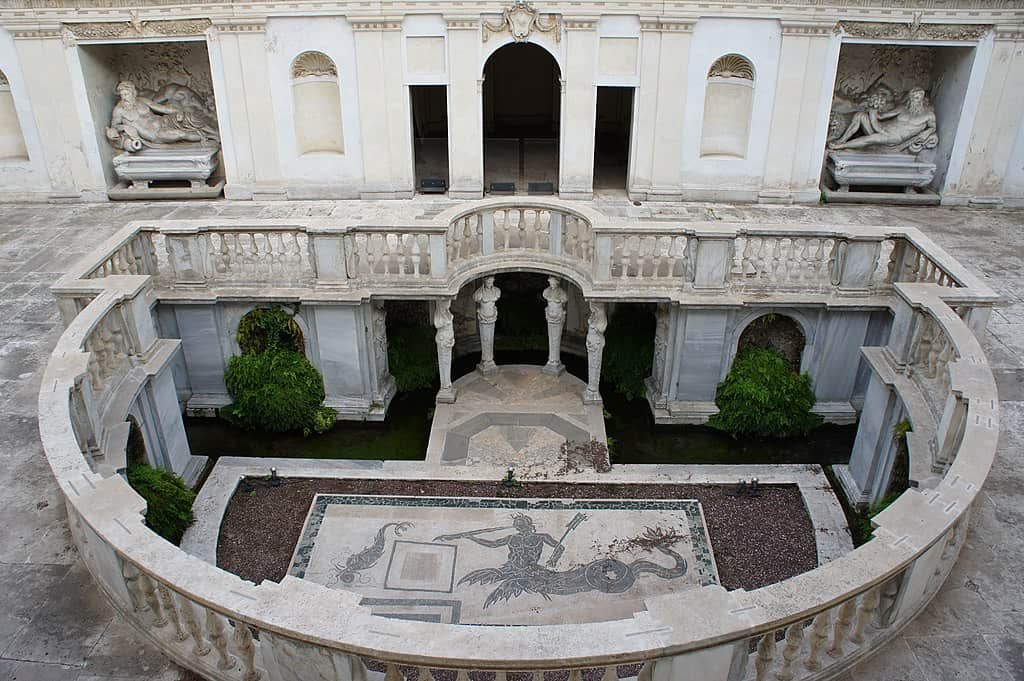
Set inside the beautiful Renaissance Villa Giulia, right on the edge of Villa Borghese park, this museum is perfect for anyone interested in pre-Roman antiquity.
The National Etruscan Museum holds an exceptional collection of Etruscan artifacts — from gold jewellery, ceramics and painted vases to the famous Sarcophagus of the Spouses from the 6th century BC.
- Where is it? Piazzale di Villa Giulia 9
- How to get there? Metro line A → Flaminio; trams 2, 3, 19
- Opening hours: Tue–Sun 8:30–19:00 (last entry 18:30)
- Ticket price: €13 full; €2 reduced (EU citizens 18–25)
- Free entry: First Sunday of every month — no advance reservations
- Reservation: No
- Included in the Roma Pass: Yes
National Gallery of Ancient Art (Galleria Nazionale d’Arte Antica – Palazzo Barberini)
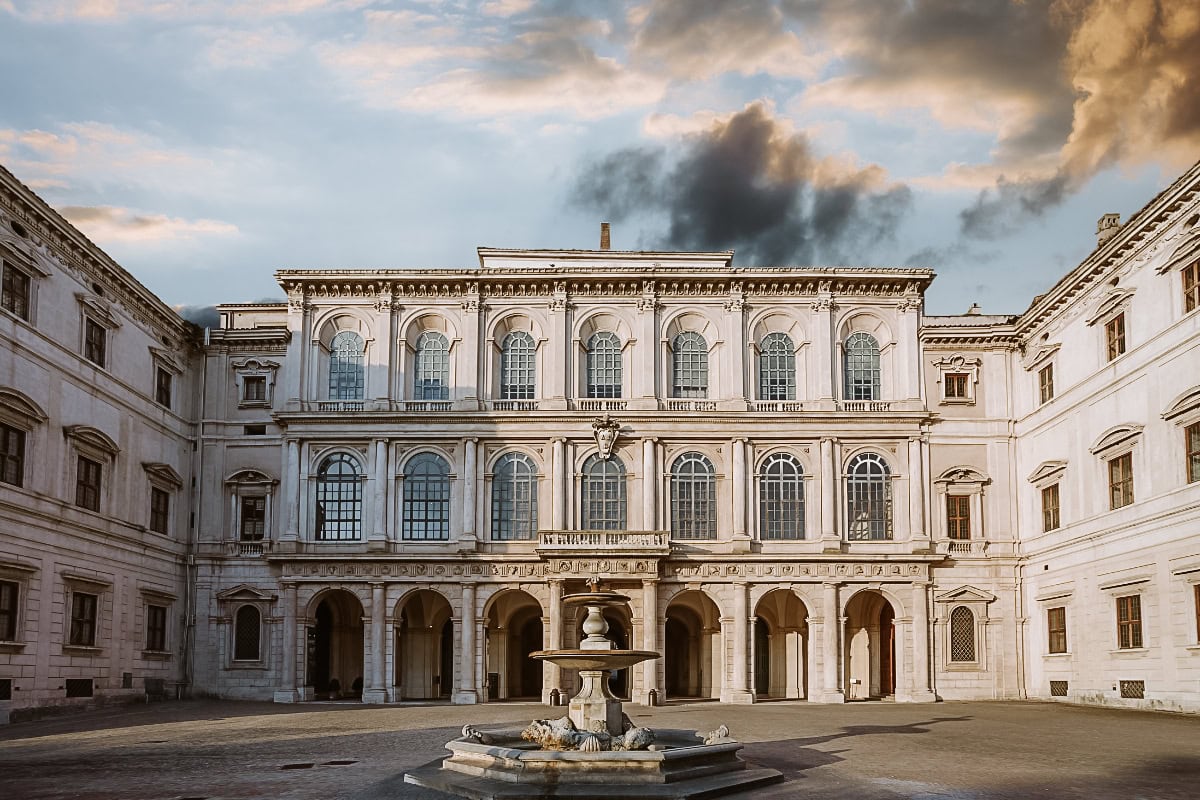
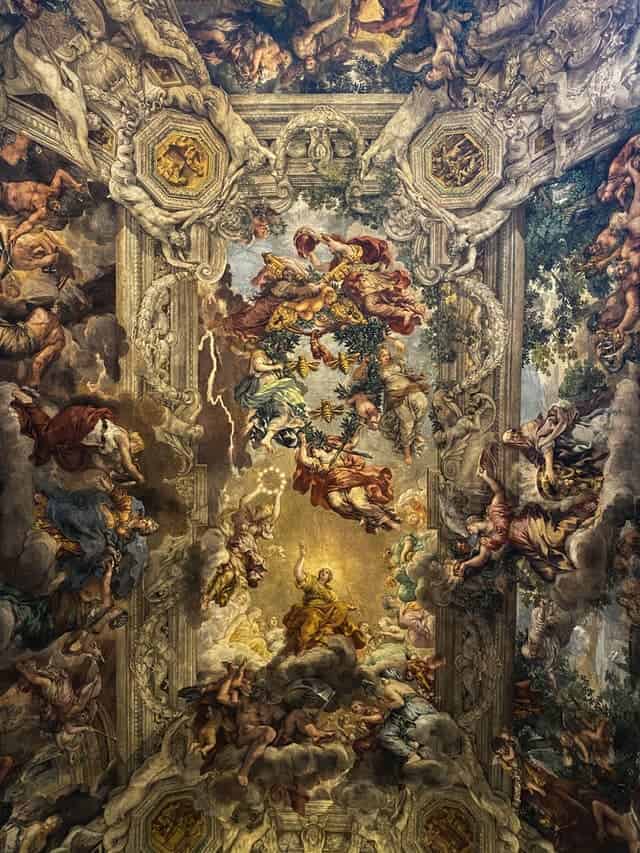
The Palazzo Barberini is a grand Baroque palace from the 17th century and home to the National Gallery of Ancient Art.
The façade was designed by Carlo Maderno, the architect behind St. Peter’s Basilica. After his death, both Bernini and his rival Borromini continued the project, each contributing a monumental staircase.
Inside, you’ll find more than 1,400 artworks from the 13th to the 18th century — including works by Titian, El Greco, Caravaggio and Tintoretto, as well as Raphael’s famous portrait of his lover, La Fornarina.
- Where is it? Via delle Quattro Fontane 13
- How to get there? Metro line A → Barberini; buses 52, 53, 56, 58, 60, 61, 95, 116, 175, 492, 590
- Opening hours: Tue–Sun 10:00–19:00 (ticket office closes 17:00)
- Ticket price: €15 full; €2 reduced (EU citizens 18–25) — valid for both Palazzo Barberini and Palazzo Corsini
- Free entry: First Sunday of every month — no advance reservations
- Reservation: No
- Included in the Roma Pass: Yes
National Gallery of Modern and Contemporary Art (Galleria Nazionale d’Arte Moderna – GNAM)
If you’re ready for a break from ancient ruins and Renaissance palaces, the National Gallery of Modern and Contemporary Art — known as GNAM — is the perfect change of pace.
Here you’ll find Italy’s largest collection of 19th–20th century art, ranging from Neoclassicism and Impressionism to Futurism and Surrealism.
Expect sculptures by Italian masters Antonio Canova and Umberto Boccioni, paintings by Modigliani and Giorgio de Chirico, French artists like Cézanne, Rodin, Degas, Monet, Van Gogh, and even works by Austrian icon Gustav Klimt.
- Where is it? Viale delle Belle Arti 131
- How to get there? Metro line A → Flaminio; trams 3, 19; buses 61, 89, 160, 490, 495 → Piazzale del Fiocco
- Opening hours: Tue–Sun 9:00–19:00 (last entry 45 min before closing)
- Ticket price: €17 full; €2 reduced (EU citizens 18–25); €10 reduced if you visited the Borghese Gallery (see above)
- Reservation: Not required
- Included in the Roma Pass: Yes
Budget accommodation in Rome
Note: We only recommend services we personally use and trust.
MAXXI – National Museum of 21st-Century Arts (Museo Nazionale delle Arti del XXI Secolo)
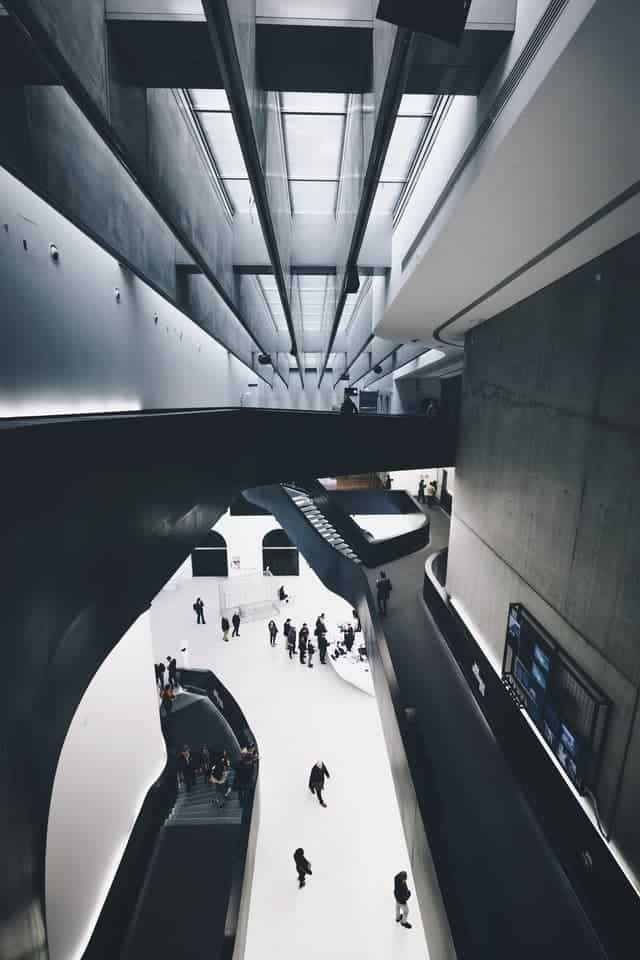
MAXXI is Rome’s leading museum of contemporary art. Its permanent collection features around 300 works, but the real highlight is the series of temporary exhibitions, which usually showcase innovative and avant-garde artists from all over the world.
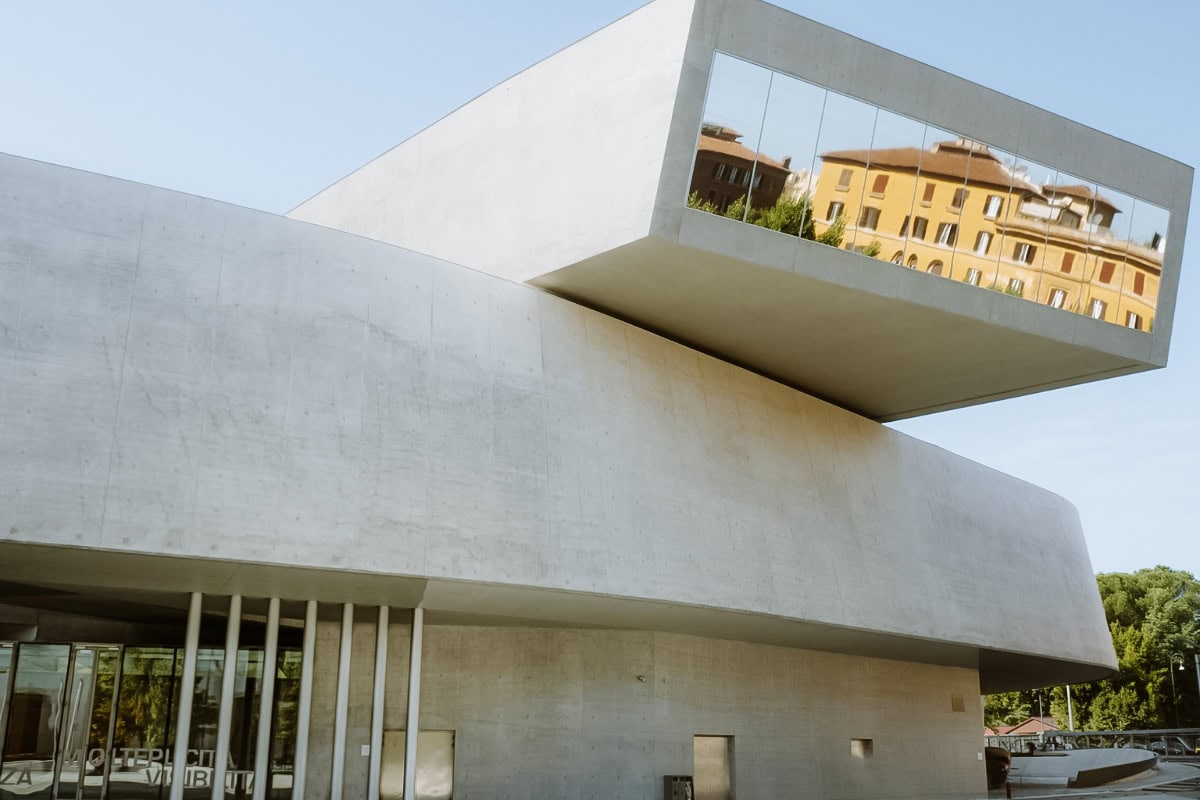
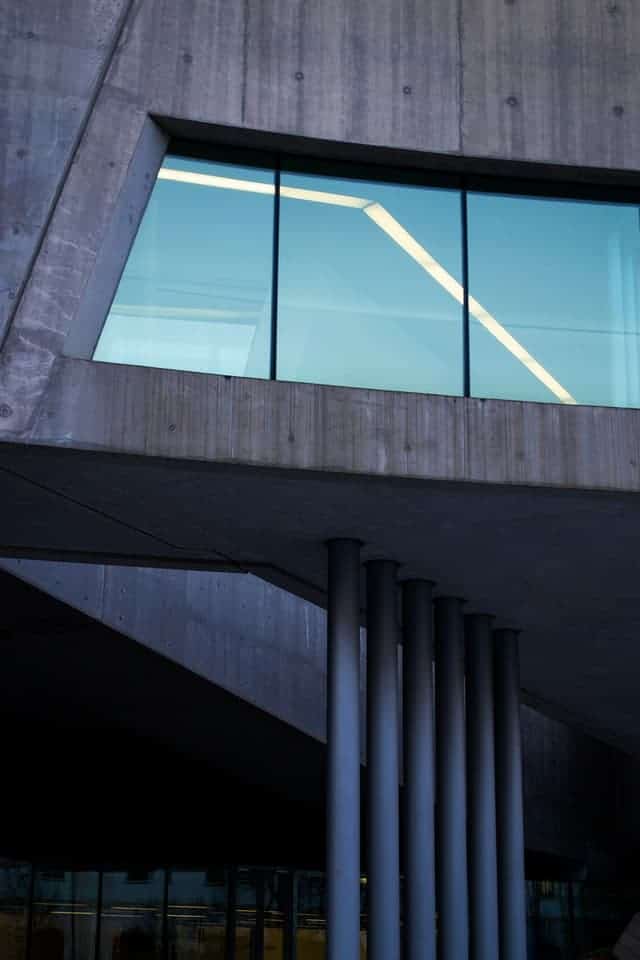
The museum building itself is a masterpiece. Once a military barracks, it underwent a radical transformation led by Iraqi architect Zaha Hadid. Today, the flowing lines, concrete surfaces, glass and natural light come together to form a striking architectural experience.

- Where is it? Via Guido Reni 4
- How to get there? Metro line A → Flaminio; tram 2; buses 53, 168, 910
- Opening hours: Tue–Sun 11:00–19:00
- Ticket price: €15 full; €12 reduced (EU citizens 14–25)
- Reservation: Not required
- Included in the Roma Pass: Yes
Where to Stay in Rome
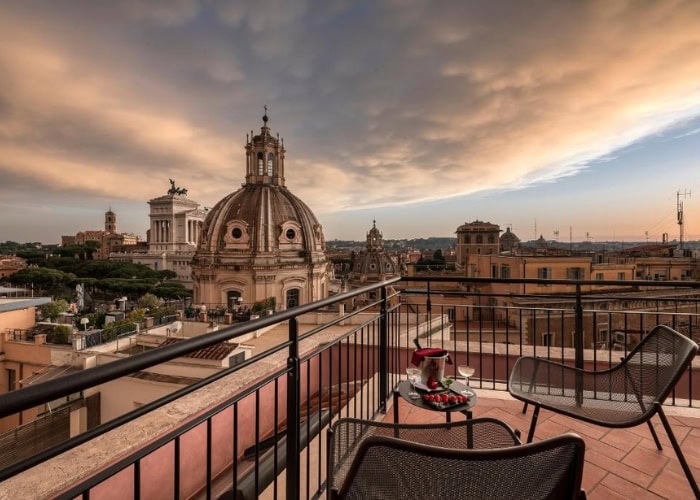
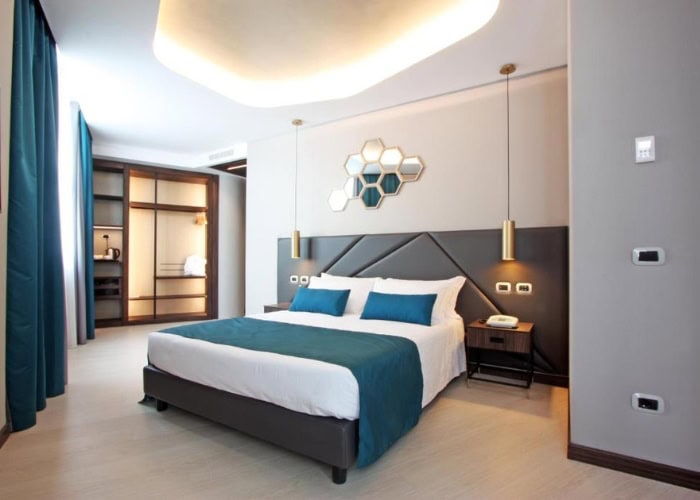
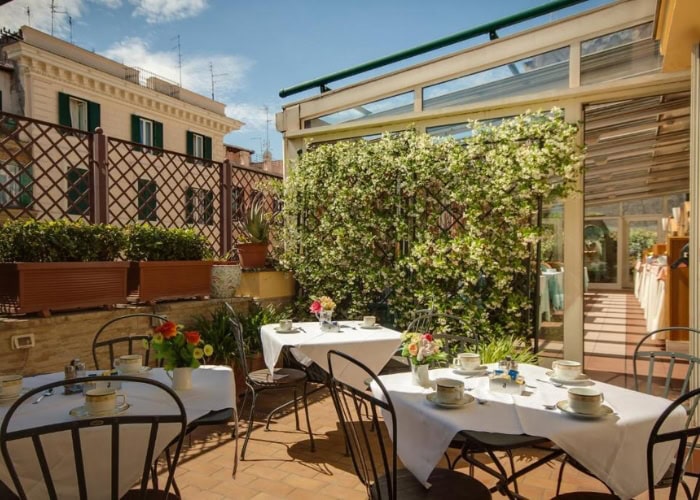
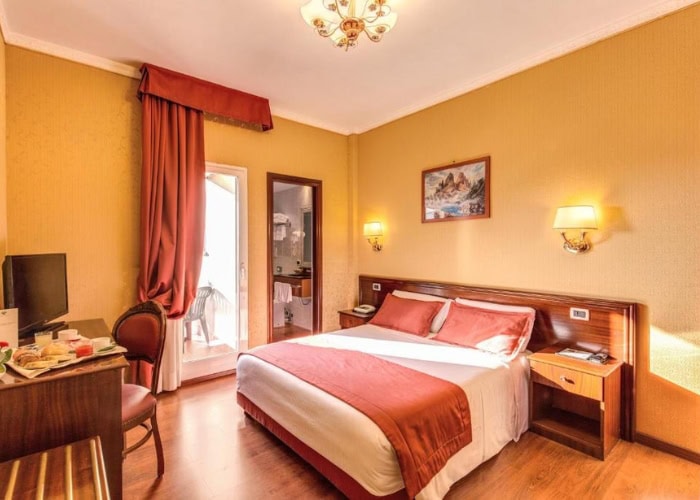
- Hotel Borromeo – A cosy 3-star hotel with air-conditioning and a rooftop terrace. We stayed here and were really happy with the choice — the location just a few minutes from the metro and within walking distance of the centre is excellent, the rooms are clean and the area is pleasantly quiet in the evening. A great balance of price and location.
- Hotel Impero – A simple, affordable hotel with excellent breakfasts and a rooftop terrace. The rooms are older but clean and cosy. A quiet location, ideal if you’re looking for comfortable, no-frills accommodation.
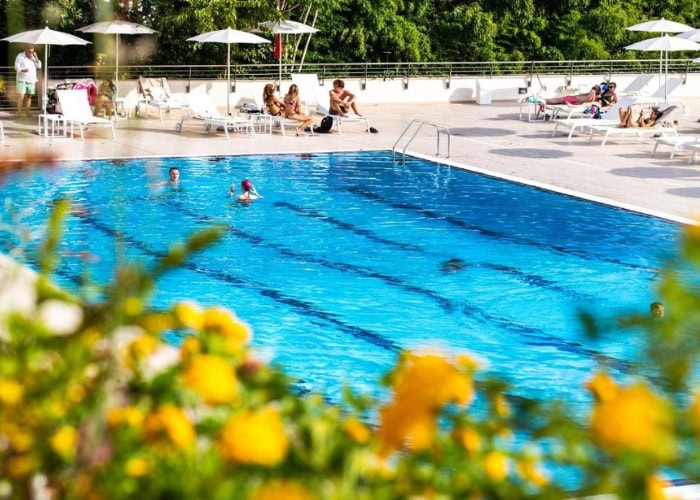
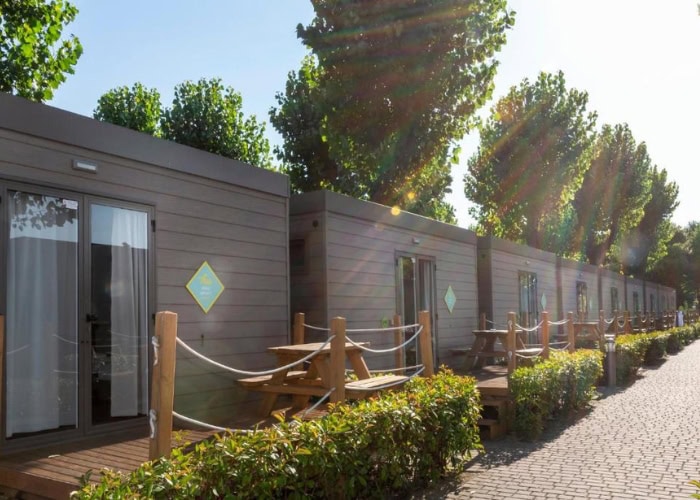
- hu Roma Camping in Town – Air-conditioned bungalows and cabins, a pool, hot tub, bar and free parking. A good choice if you’re driving or want a cheaper option with full facilities.
- Cardinal Hotel St. Peter – Cosy rooms for 2–4 people, a pool, optional half board, a rooftop terrace, a peaceful location and very good prices.
We’ve also created a detailed guide on where to stay in Rome — including the best neighbourhoods, accommodation by budget, a map and practical tips on getting from your hotel to major sights or the airport.
Museums in Rome – MAP
Below is a detailed map of the museums and highlights featured in this Rome guide. Click the menu icon in the top left corner to show or hide layers.
You can also click on any icon to see the name of the place. To save the map, mark it with a star. For full-screen view, use the icon in the top right.
These were our tips for the best museums in Rome. Got a question? Feel free to ask in the comments below. Have a wonderful trip!
More Information About Rome
If you’re planning a trip to Rome, here are some of our other guides that will make your visit easier — and help you enjoy the city to the fullest:
- Rome Travel Guide — transport tips, food, prices and practical insights from our own trips
- Best Places to Visit in Rome – an overview of the most beautiful sights with opening hours, ticket prices and a helpful map.
- Rome Itinerary: 3 Days — a day-by-day plan covering all the essential sights
- Rome in 1 Day — what to see if you only have a few hours in the city
- Where to Stay in Rome — the best neighbourhoods and hotels for every budget + map
- Vatican Museums & Sistine Chapel — what not to miss and how to avoid the lines
- Colosseum & Ancient Rome — tickets, opening hours and tips for your visit
- How to Save Money in Rome — tourist passes, cheap entrances and transport tips
- How to Get From Fiumicino Airport to Rome — all transport options explained clearly