What are the opening hours for the Colosseum? How does the entry work? And how much are the tickets in 2026? This guide is based on our own experience and the latest official updates for the year 2026.
The Colosseum — everyone wants to see it. We wanted it so much that on our very first visit to Rome, we literally walked there straight from the train station with our backpacks still on. And yes… it blew us away. Both times.
It’s one of those places that actually exceeds the huge expectations you arrive with. Well — as long as you mentally ignore the piles of rubbish around the area and the army of street vendors selling selfie sticks.
We update the ticket prices, opening hours and other useful details several times a year. You’ll always find the date of the latest update at the top of this article.
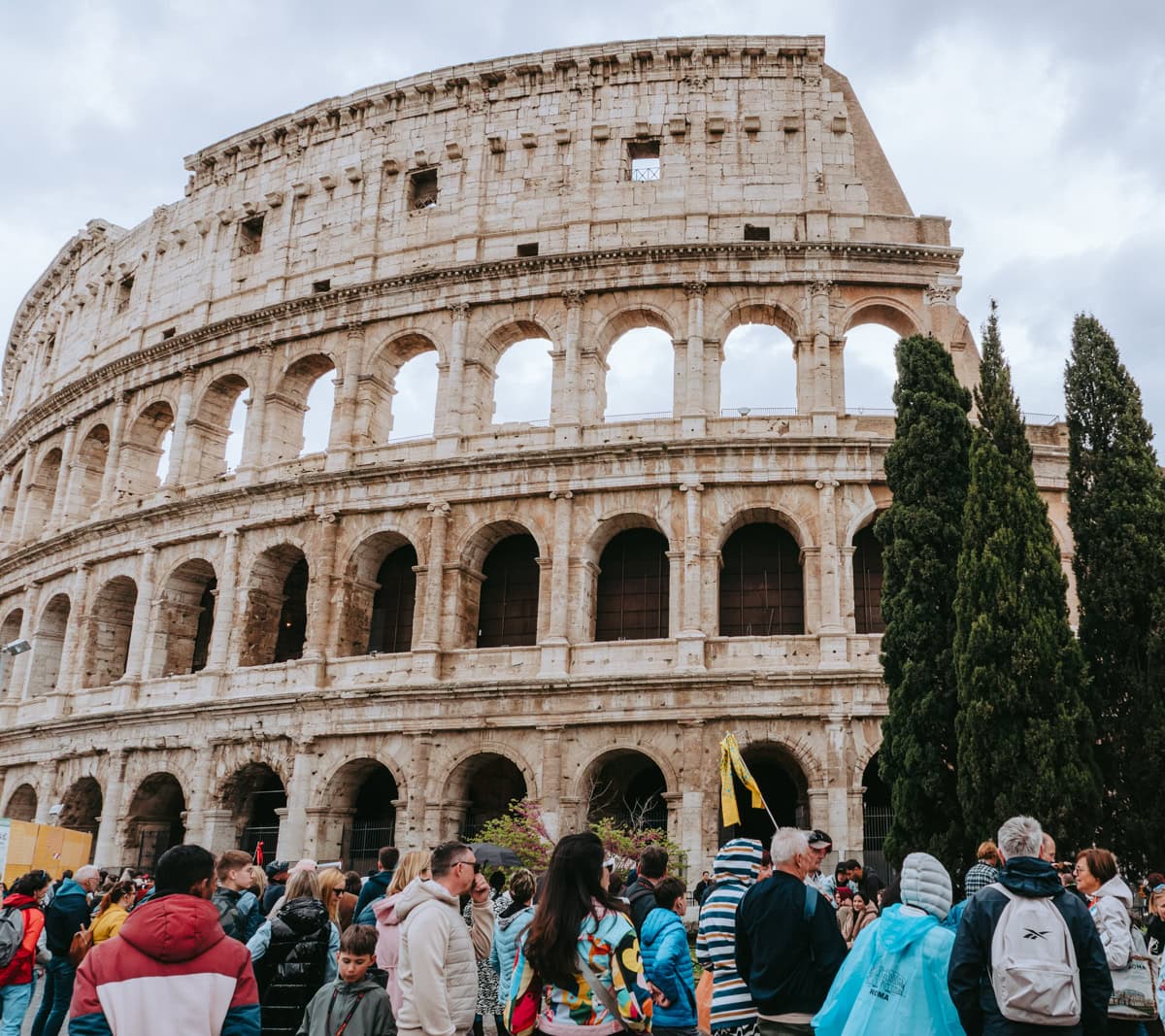
Quick Info About the Colosseum
How Much Do Colosseum Tickets Cost?
Full admission to the Colosseum is €16, and the reduced ticket for EU citizens aged 18–25 is €2. Entry is free for everyone under 18 and for anyone using the Roma Pass as one of their free entrances. A small booking fee is added to every ticket.
Here’s the official booking website — you simply choose a specific entry time for the Colosseum. The ticket also includes access to the Roman Forum and Palatine Hill, which you can visit at any time within 24 hours.
Important: Children under 18 and visitors with disabilities (plus one companion) get free entry. Reserve your free ticket online and show the required documents at the entrance.
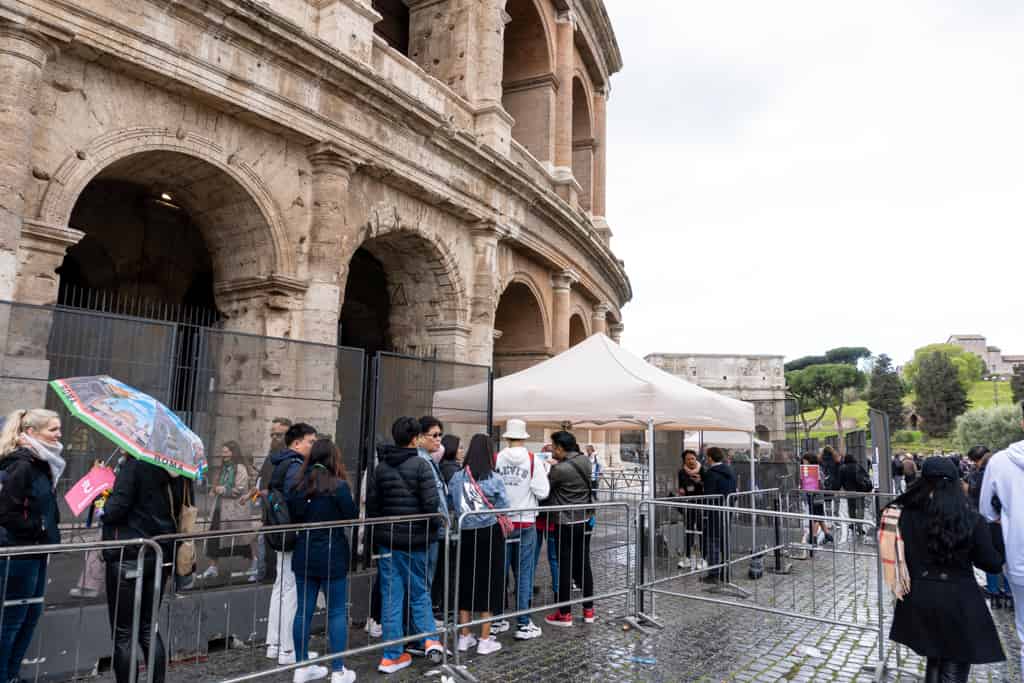
What If Colosseum Tickets Are Sold Out?
It’s completely normal in Rome — Colosseum tickets (and many others) can sell out weeks in advance. Check the current availability on the official website (see the link above).
If no time slots are available, you can try your luck on-site (a limited number of tickets is released each day on a first-come, first-served basis). Or you can look here for all the alternative ways to visit the Colosseum.
Do I Need to Print My Colosseum Tickets?
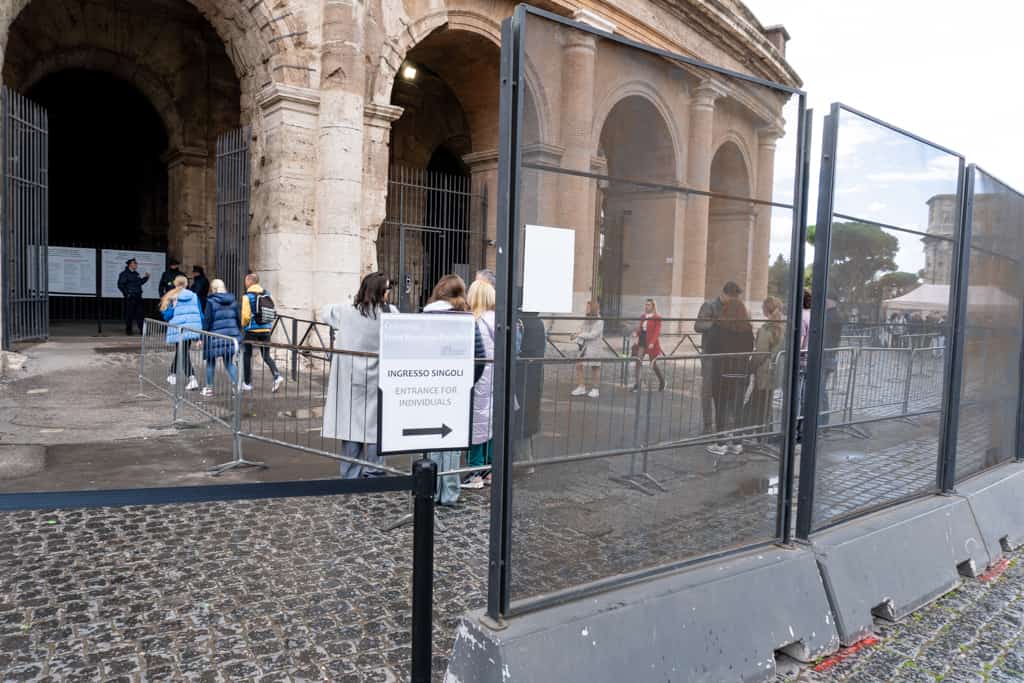
You can print your tickets — or simply show the QR code on your phone at the entrance. Individual visitors enter through the right-hand queue (the left side is for guided tours).
How to Save Money When Visiting the Colosseum
The Roma Pass is Rome’s official tourist card and one of the easiest ways to save money on entrance fees and public transport.
What does the card include?
- Free entry to two sites of your choice. It makes sense to use the free entries for the most expensive places — the Colosseum, Borghese Gallery, the Capitoline Museums, etc.
- Discounted admission to most other museums and archaeological sites across Rome (the Vatican is not included).
- Unlimited public transport within the city: metro, buses, trams and local trains within the metropolitan area.
If you’re considering getting the Roma Pass, have a look at our detailed review — we share our own experience and tips in a separate article (opens in a new tab).
Interesting Facts About the Colosseum
The Colosseum is one of Rome’s defining symbols, with more than 2,000 years of history behind it. In 2018, it welcomed over 7.7 million visitors, making it the fifth most visited landmark in the world.
It’s the largest amphitheatre ever built — and the fact that it’s still standing after earthquakes, fires, wars and centuries of neglect is incredible in itself. This is where gladiator fights and battles with wild animals once took place. And yes — the arena was even flooded at times so that the Romans could stage mock naval battles.
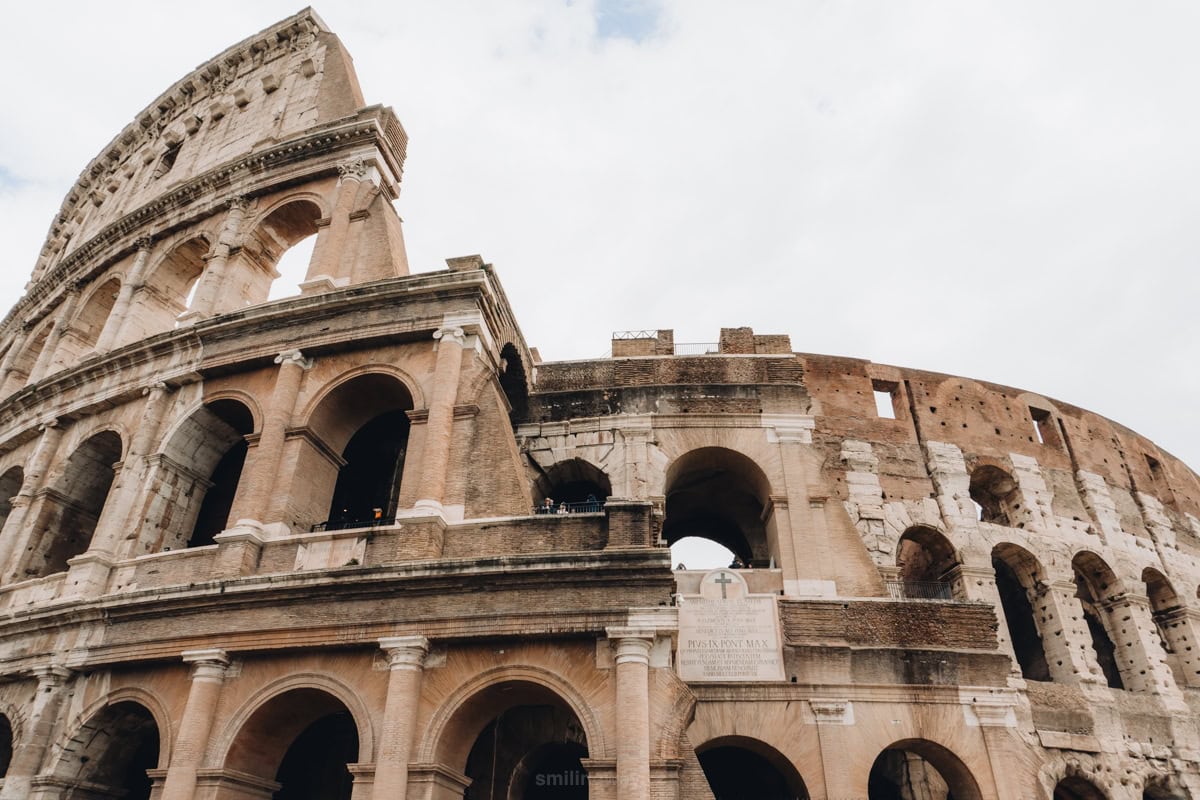
The Colosseum wasn’t always called the Colosseum. When Emperor Vespasian, founder of the Flavian dynasty, built it in 80 AD, it was known as the Flavian Amphitheatre.
Even today, the engineering feels mind-blowing. The entrances were numbered, the seating was arranged in three steep tiers (women and children sat at the very top), and the arena could hold up to 80,000 spectators. A massive canvas awning once stretched over the stands to provide shade.
Beneath the arena floor lay an entire underground world — the hypogeum, a network of tunnels used to hold animals and to bring gladiators in from the nearby training school.

For more than 500 years, the amphitheatre was the centre of public entertainment. Romans came here to watch exotic animals, gladiator fights and public executions.
The name “Colosseum” came much later, in the Middle Ages, inspired by the colossal statue of Emperor Nero that once stood nearby.
You might be surprised by how much of the structure is missing today. Some of the damage is simply the result of earthquakes and centuries of wear and tear.
But there’s an even more interesting reason — a large part of the Colosseum’s marble was taken over the centuries and reused for other buildings, including parts of the Vatican.
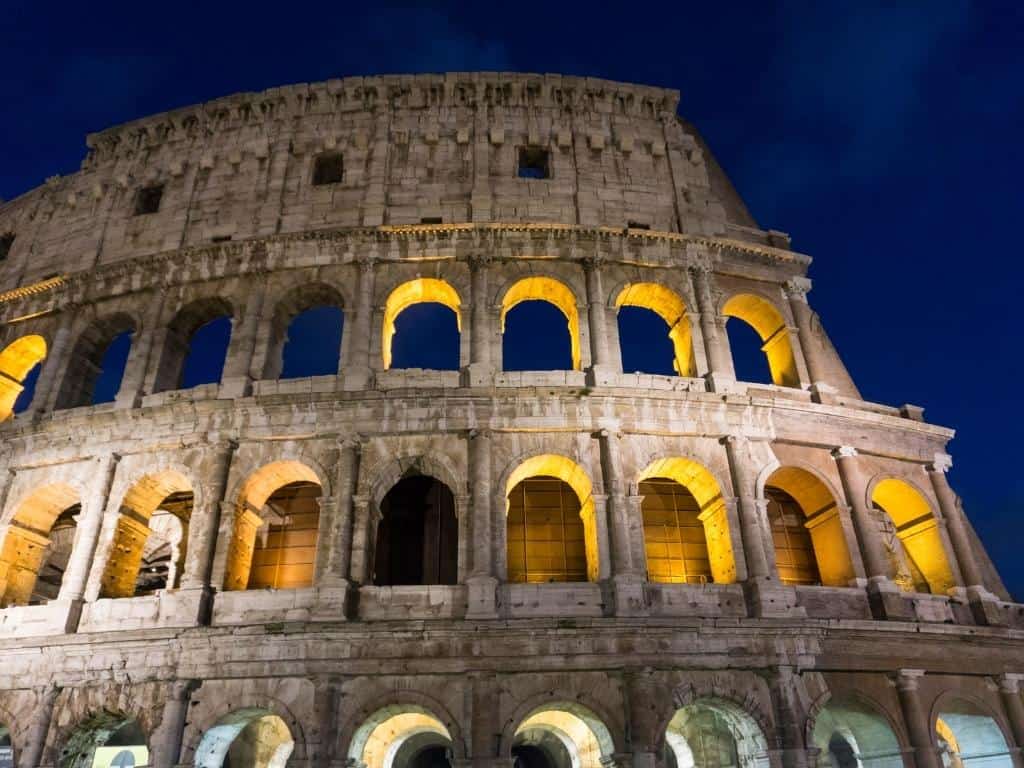
Tip: If you have time, stop by the Colosseum again in the evening. We were surprised how quiet it was — and beautifully lit. The atmosphere is completely different from daytime.
Palatine Hill & Roman Forum
Palatine Hill and the Roman Forum sit right across from the Colosseum, and you can visit all three sites with a single ticket.
Palatine Hill
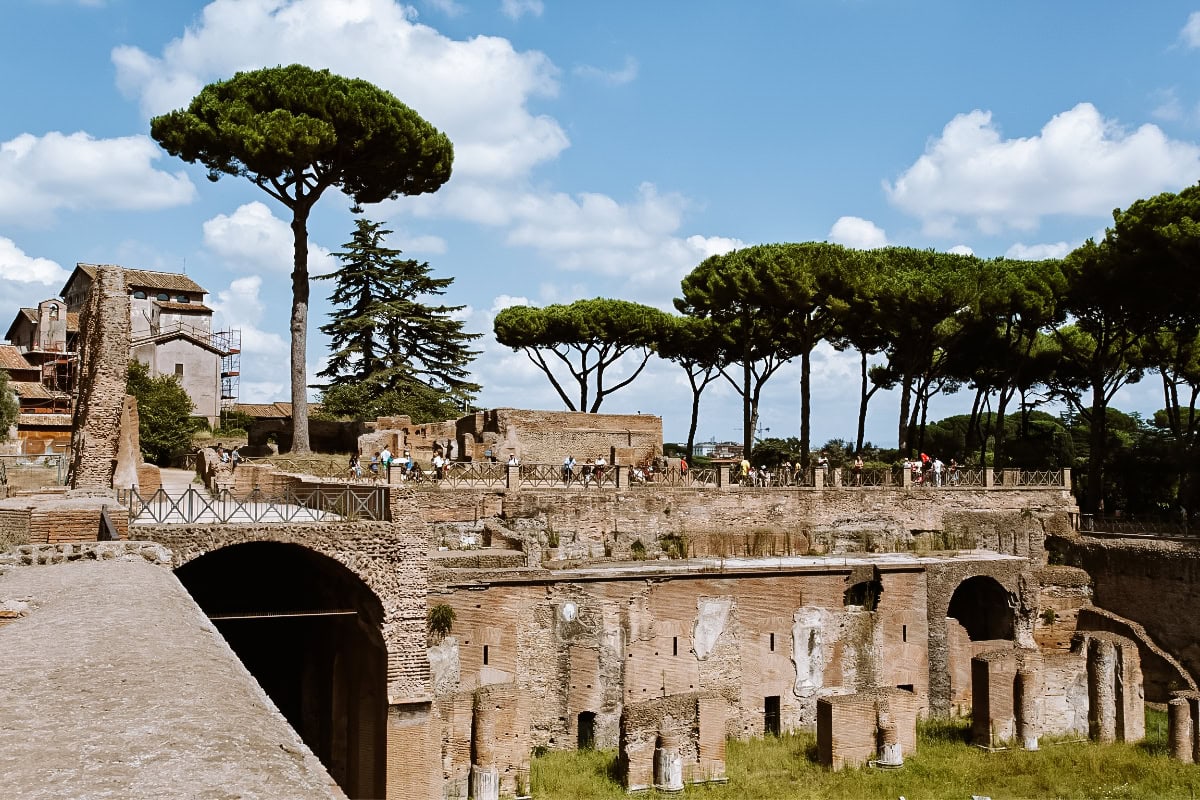
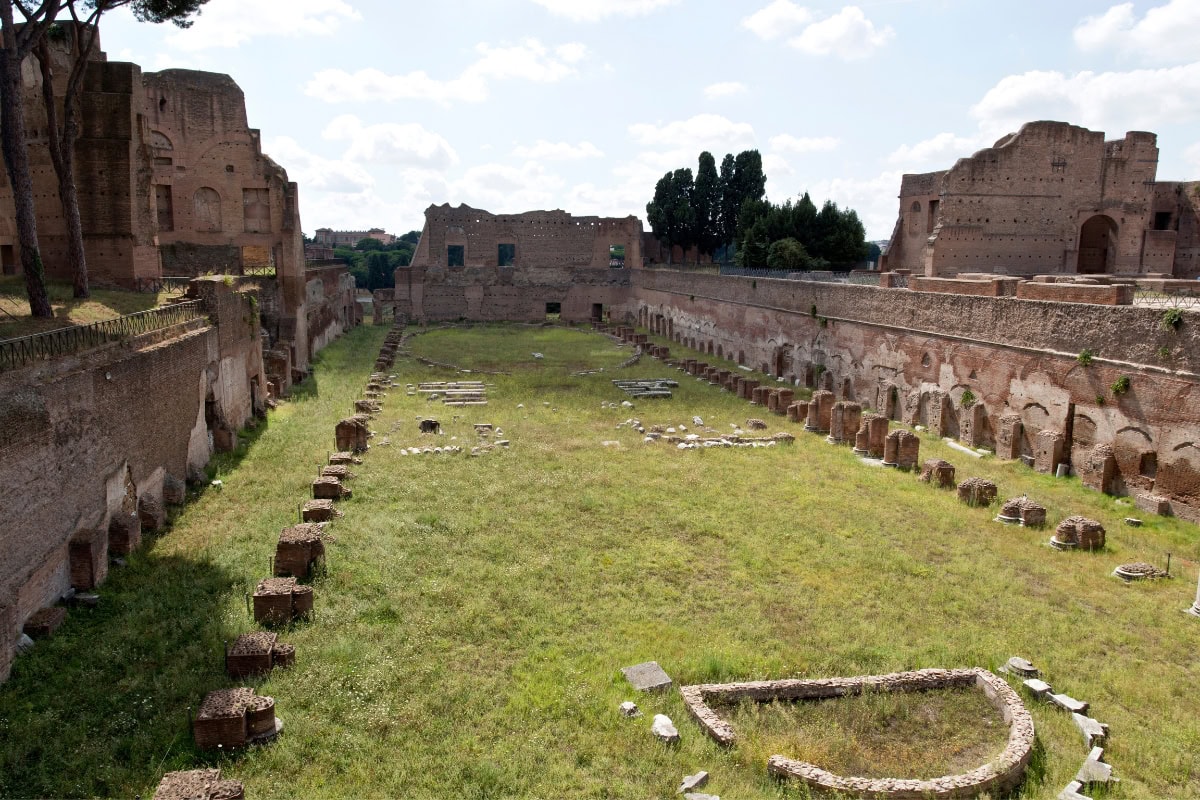
Palatine Hill is the mythical birthplace of Rome. According to legend, Romulus founded the city here in 753 BC. Later, the hill became a prestigious address — home to imperial palaces, wealthy patricians, generals and the “celebrities” of ancient Rome.
And the word palace? It actually comes from the Latin name of the hill — Palatium.
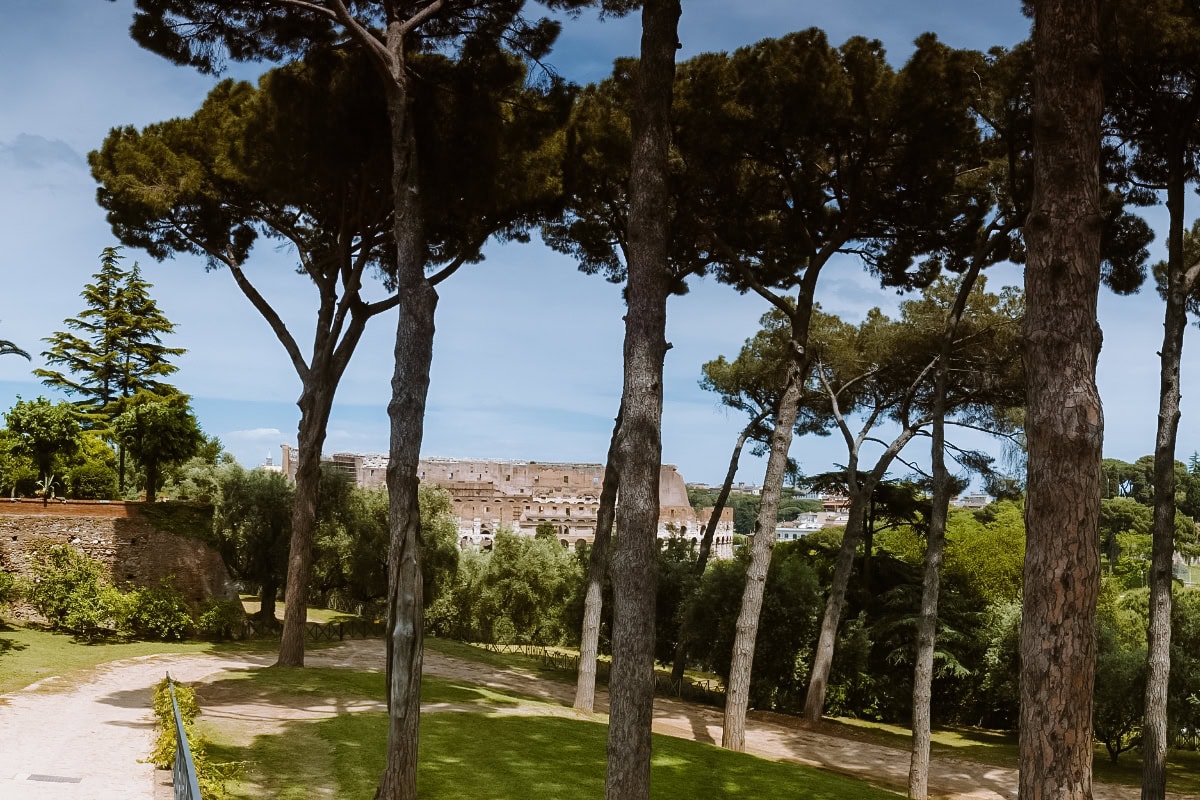
Today, most of what you see are the remains of Emperor Domitian’s enormous palace complex. From the balcony on the northeastern side, you’ll get a beautiful view over the Roman Forum.
Roman Forum
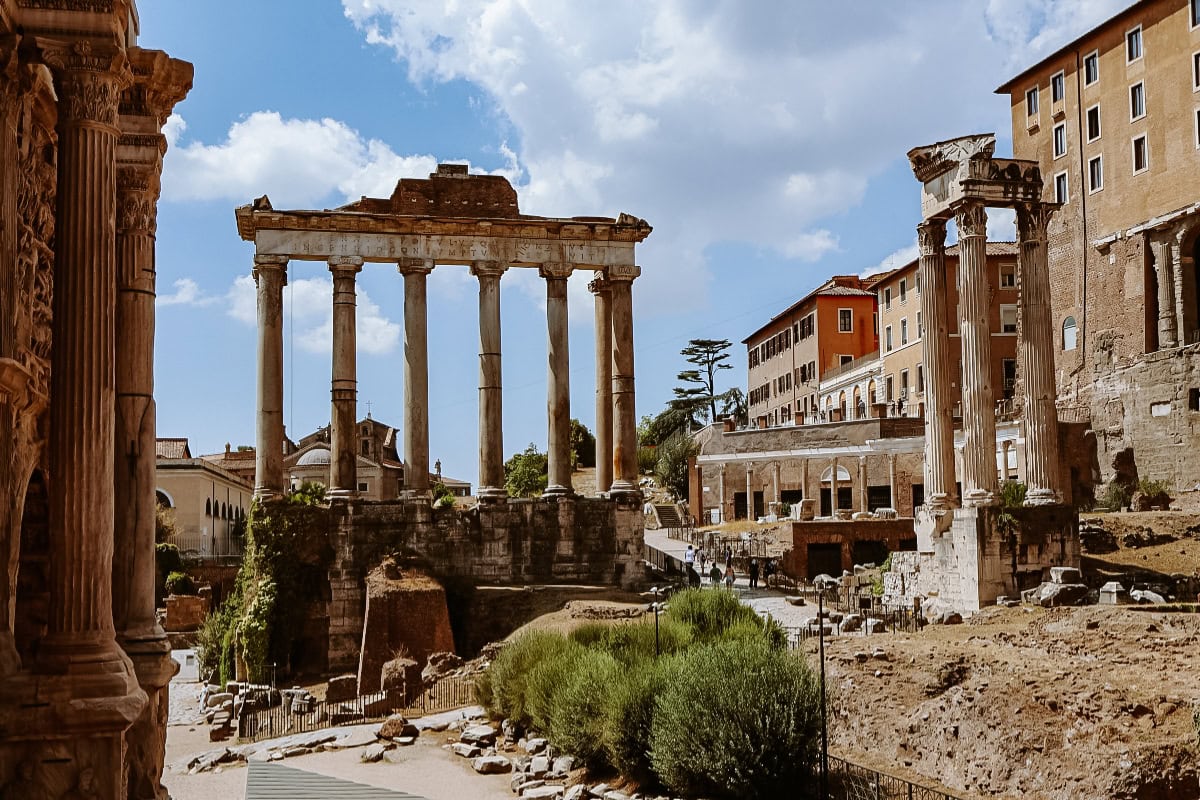
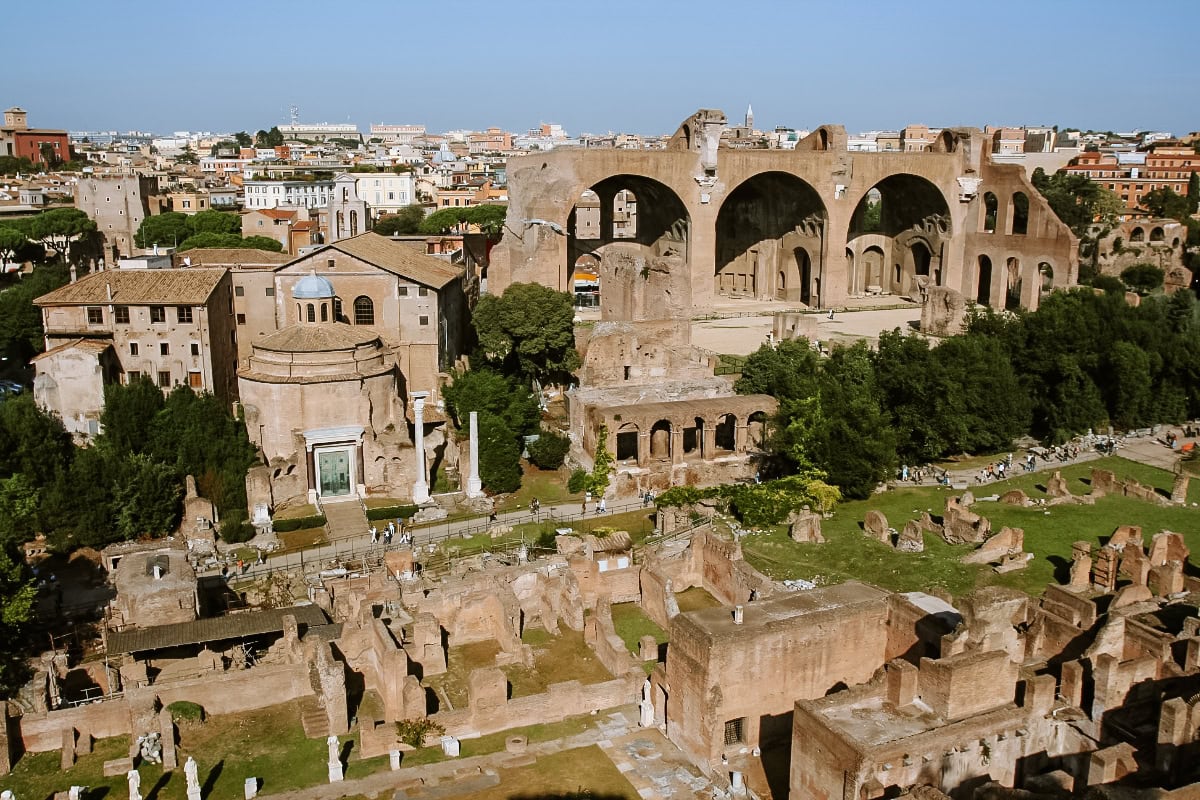
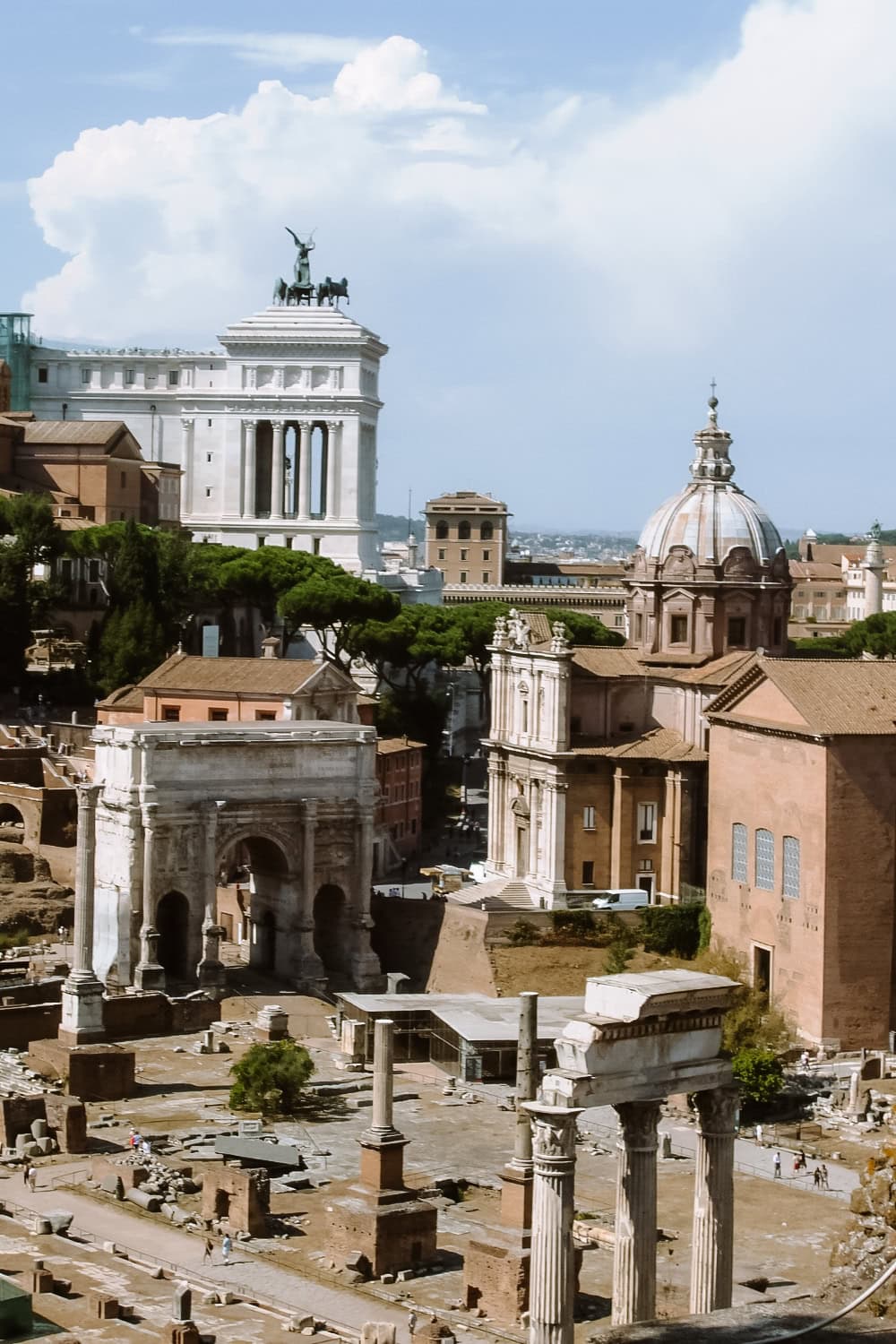
The Roman Forum is a large archaeological area between the Palatine Hill and the Colosseum. In ancient times, this was the centre of public life in Rome.
The ruins include temples, courts, government buildings and public squares — and several structures have survived in surprisingly good condition. You can see the original Senate House (the Curia), the Arch of Titus, the columns of the Temple of Saturn and the Temple of Caesar, where Caesar’s body was cremated after his assassination in 44 BC.
Both the Roman Forum and Palatine Hill are absolutely worth visiting.
Where Is the Colosseum Located?
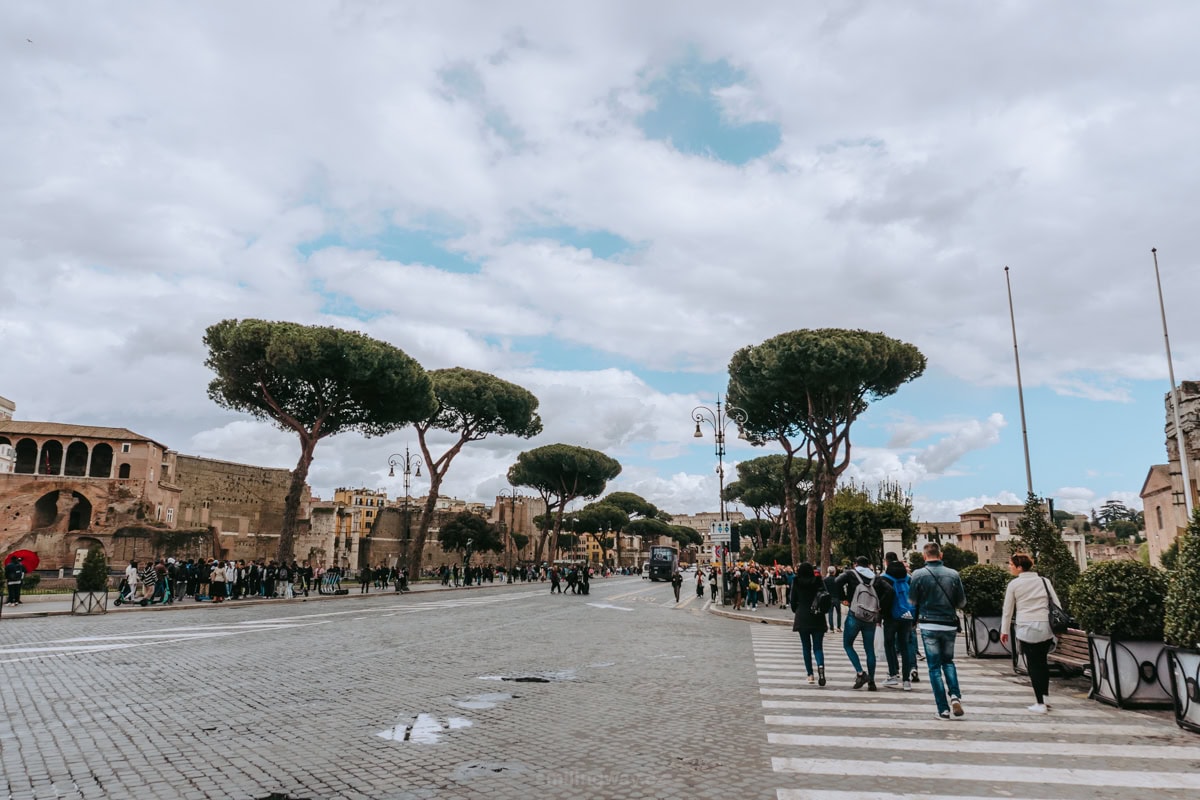
The Colosseum stands on the small square Piazza del Colosseo, right in the heart of Rome. The Roman Forum and Palatine Hill are directly opposite.
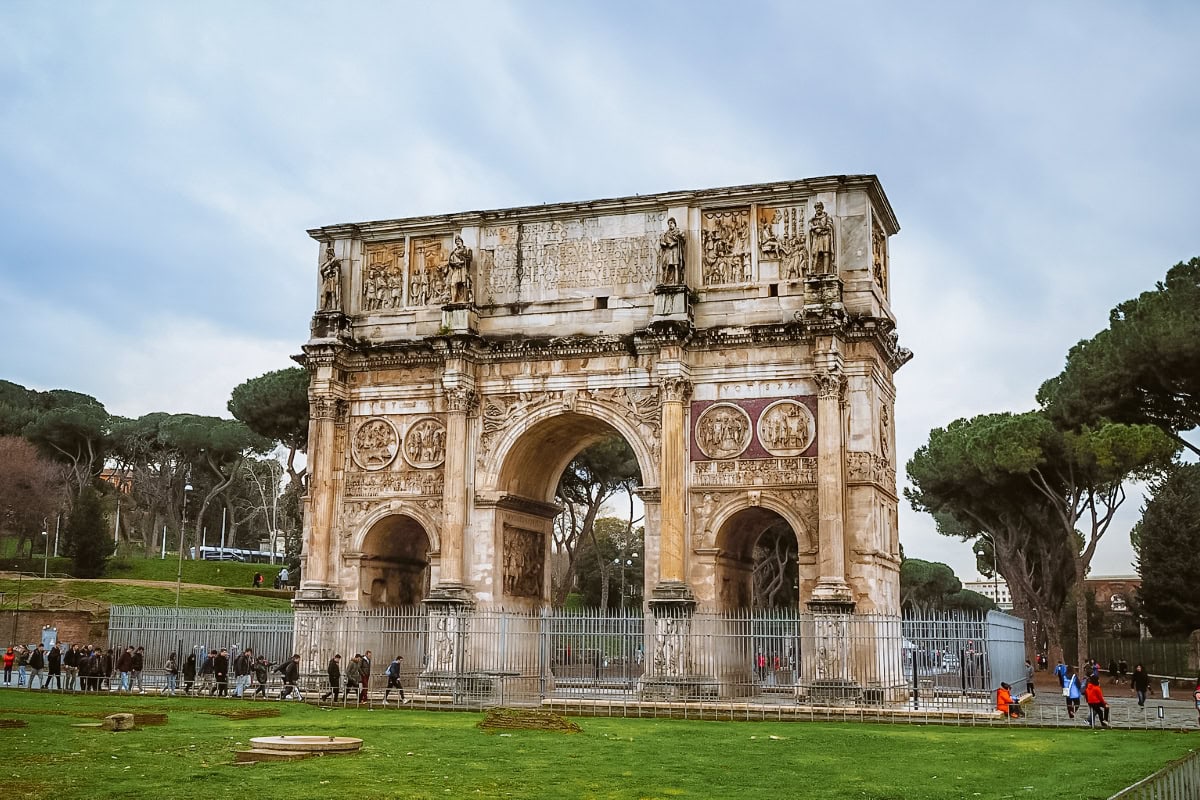
Between them rises the Arch of Constantine, built in 315 AD to commemorate Emperor Constantine the Great’s victory at the Battle of the Milvian Bridge.
How to Get to the Colosseum
The Colosseum is very easy to reach from Termini Station. It’s about a 20-minute walk.
If you go through Parco del Colle Oppio, you’ll get a great view of the Colosseum from a quieter angle — often with hardly anyone around.
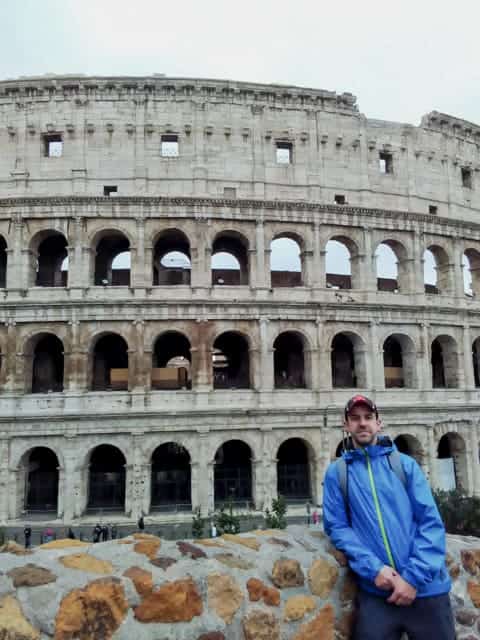
You’ll also find a few other ancient ruins in the park… along with quite a few modern “ruins” in the form of rubbish. You get used to that quickly in Rome — the chaotic vibe is the total opposite of polished Dubai.
- Metro line B – Colosseo stop
- Metro line C – Colosseo stop
- Bus: 75, 81, 175, 204, 673
- Tram: Line 3
Public transport tickets are sold in kiosks, newsstands and ticket machines. A single ticket costs €1.50 and is valid for 100 minutes. You can also buy a pack of 10 tickets for €15.
If you’re planning to ride around the city more often, these unlimited day passes are available:
- 24-hour ticket — €8.50
- 48-hour ticket — €15
- 72-hour ticket — €22
- Weekly ticket — €29
All passes are valid from the moment you first validate them.
Entering the Colosseum
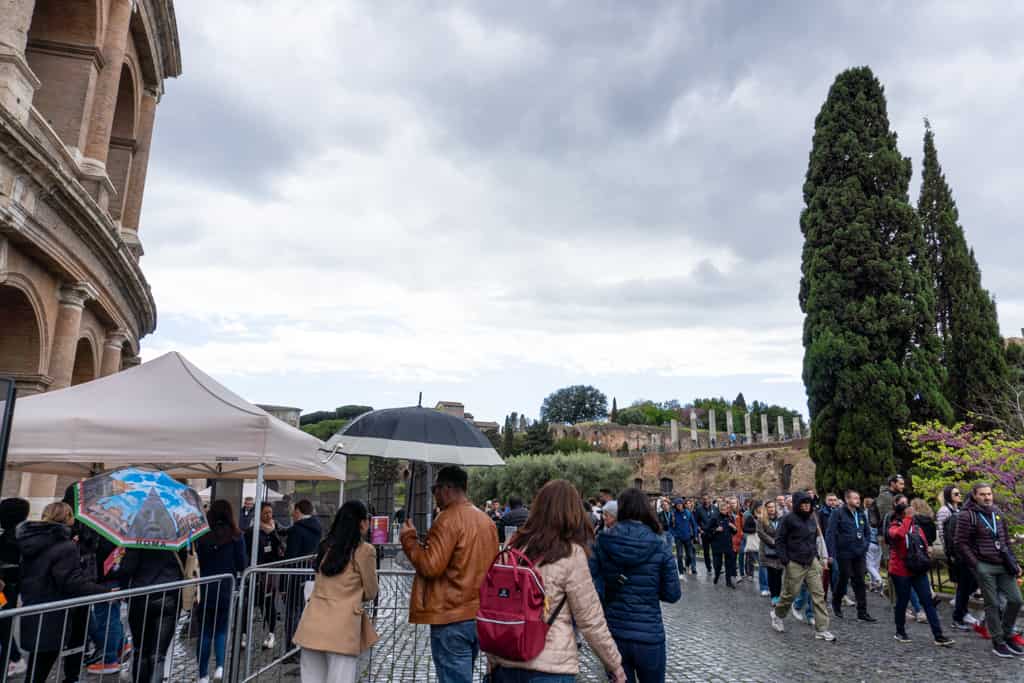
Arrive at least 15 minutes early. It can feel a bit chaotic — individual visitors and guided groups mix together, and there’s a security check before you go in.
You’ll enter at the exact time you selected when booking your ticket. This rule doesn’t apply to the Roman Forum and Palatine Hill — you can visit those either before or after the Colosseum, as no specific time slot is required.
There are two main entrances. Individual visitors use the right-hand entrance, which is clearly signposted.
The entrance to the Roman Forum and Palatine Hill is just beyond the Arch of Constantine on the right, at Via di San Gregorio 30.
What to Expect During Your Visit
Before entering, have your ticket ready — printed or on your phone — and scan it at the gate. After that, you’ll go through a quick security check. You can bring a small backpack or handbag and a plastic water bottle.
What you can’t bring inside:
- large backpacks or suitcases
- tripods (selfie sticks are usually fine)
- glass or dark-colored bottles
- alcohol
- spray cans
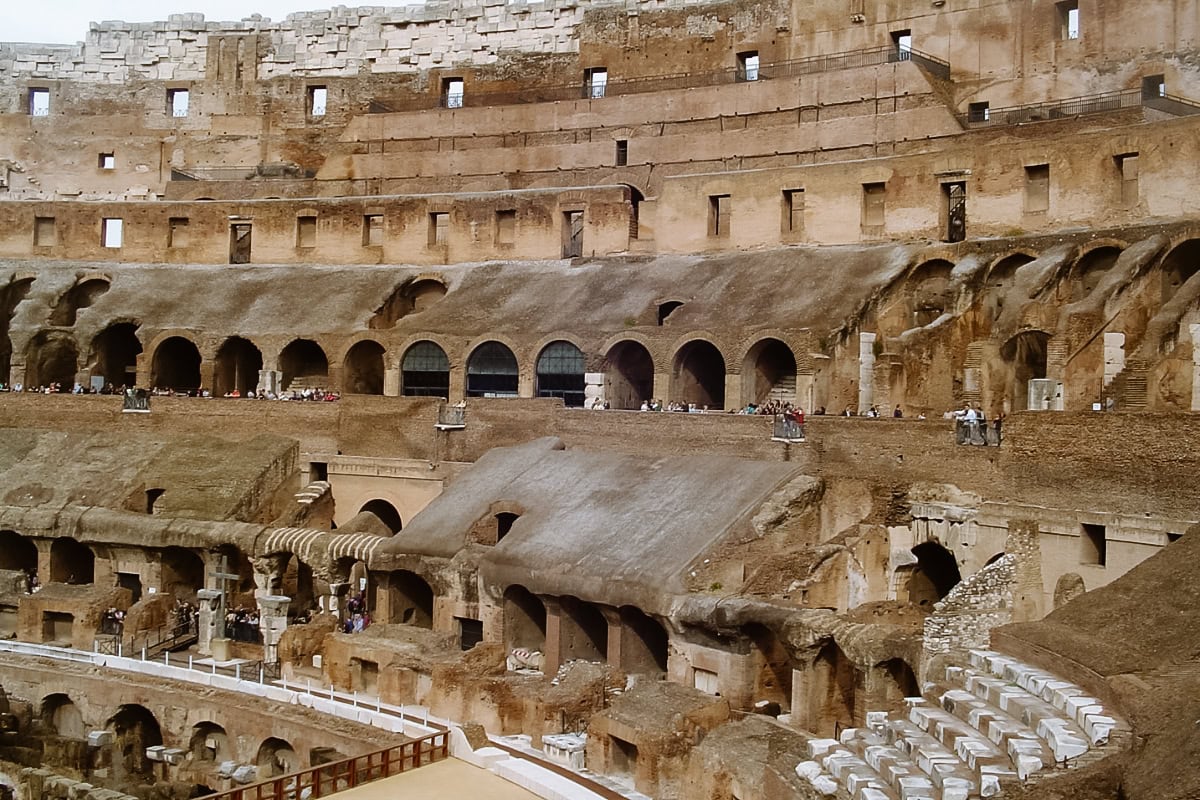
Plan to spend about one to two hours inside the Colosseum. The Roman Forum and Palatine Hill take another two to three hours.
There’s quite a lot of walking involved, so don’t forget comfortable shoes — even in summer. Rome’s famously uneven cobblestones make good footwear essential throughout the whole city.
Colosseum ticket reservation
Below you can check the current availability of tickets for the Colosseum:
Opening Hours
The Colosseum’s opening hours change throughout the year:
- 1 January – 28 February: 8:30–16:30
- 1 March – 29 March: 8:30–17:30
- 30 March – 30 September: 8:30–19:15
- 1 October – 25 October: 8:30–18:30
- 26 October – 28 February 2026: 8:30–16:30
- The Roman Forum and Palatine Hill open at 9:00 AM.
Last entry is one hour before closing. The Colosseum is closed on 1 January and 25 December.
Tickets & Admission
To enter the Colosseum, you must book a time slot in advance. On site, you’ll need to show an ID card or passport (tickets are issued in your name).
Your Colosseum ticket also includes entry to the Roman Forum and Palatine Hill. You can visit each site once. The Forum and Palatine Hill form a single archaeological park with one shared entrance.
You can choose between two main ticket types:
Standard Ticket
Standard Ticket includes access to the 1st and 2nd levels of the Colosseum.
Prices:
- Full price: €16 + €2 online booking fee
- Reduced (EU citizens 18–24.99): €2 + €2 online booking fee
- Free entry: visitors under 18; visitors with disabilities (plus a companion)
- Free with Roma Pass + €2 booking fee
Note for the reduced EU rate (18–25): You only need to show an ID confirming your age. You don’t need to be a student or have any student card — I personally double-checked this with Colosseum staff.
The standard ticket already gives you plenty to see — for most visitors, it’s more than enough.
Full Experience Ticket
If you want a closer look at the Colosseum, this ticket also includes access to the arena floor and the underground (hypogeum).
Prices:
- Full price: €22 + €2 online booking fee
- Reduced (EU citizens 18–24.99): €2 + €2 booking fee
- Free entry: visitors under 18
- Roma Pass: does not include this version (standard ticket only)
Important: This ticket type often sells out — sometimes a month in advance.
Booking Colosseum Tickets
You can either print your Colosseum tickets or simply show them on your phone at the entrance. Individual visitors use the right-hand entrance, and everything is clearly signposted.
If you prefer a guided tour, there are several options to choose from — different lengths, different themes, and tours that include the arena or underground.
When to Visit the Colosseum
If you can, visit Rome in winter — ideally from the second week of January to the end of February (crowds pick up a little around Valentine’s Day). Flights and hotels are at their lowest prices, and the city as a whole is wonderfully quiet. It’s one of the best times to enjoy Rome at a slower pace.
Temperatures rarely drop below freezing, and you often get beautifully sunny days — more like early autumn back home.
If you want milder weather but still fewer crowds, aim for mid-October to November, or mid-March to early May.
Just keep Easter in mind:
- On Good Friday, the Colosseum closes earlier because of the procession.
- On Easter Sunday and Monday, it’s open, but far busier — the Vatican Museums are closed, so many visitors head here instead.
I generally don’t recommend August. Temperatures soar, even locals escape to the coast, and there’s very little shade inside the Colosseum.
If you’re visiting in summer, pack sunscreen, a hat and a scarf to cover your shoulders when visiting the Vatican. Choose light, breathable clothes — linen is perfect.
Try to visit first thing in the morning or towards the evening, when the heat is easier to handle.
You’ll find several drinking fountains around the site — by the metro station, near the exit and inside the Roman Forum and Palatine Hill. There are also public toilets and benches if you need a break.
So when is the best time to visit the Colosseum? The quietest times are early in the morning or about an hour or two before closing, ideally in the middle of the week.
Popular tickets for Rome’s attractions
Note: We only recommend services we personally use and trust.
How to Save on Colosseum Tickets
Right now, there are three main ways to save money on Colosseum entry:
- Free entry on the first Sunday of the month: Just be prepared for very long queues — it’s extremely popular.
- Culture Week: Usually takes place in mid-March. During this week, many sites across Rome are free to enter — including areas that are normally closed to the public. The downside? The city gets very crowded.
- Roma Pass: With the Roma Pass, you get free entry to major landmarks such as the Colosseum, Castel Sant’Angelo and the Capitoline Museums, plus discounted entry to many other places. It also includes unlimited public transport and access to information points where you can charge your phone or use the restroom.
The Roma Pass is available in three versions:
- Roma Pass 48 Hours – free entry to your first chosen attraction (you’ll save the most at the Colosseum) + discounted admission to all others, plus unlimited public transport for 48 hours.
- Roma Pass 72 Hours – free entry to two attractions of your choice (e.g., the Colosseum and the Borghese Gallery) + discounted admission to all others within 72 hours, transport included.
- Roma Pass + Omnia Card – everything included in the 72-hour Roma Pass, plus free entry to the Vatican Museums and the Sistine Chapel, and a hop-on hop-off bus ticket.
For more details, see our in-depth Roma Pass review, where you can easily calculate whether one of the cards will actually save you money or offer other advantages.
Where to Stay in Rome
- Hotel Impero – A simple, affordable hotel with excellent breakfasts and a rooftop terrace. The rooms are older but clean and cosy. A quiet location, ideal if you’re looking for comfortable, no-frills accommodation.
- Hotel Borromeo – A 3-star hotel with air conditioning and a rooftop terrace. We stayed here and were happy with it — the location is great (a few minutes from the metro and walking distance to the centre), the rooms are clean and the area is quiet at night. A great balance of price and location.
- Cardinal Hotel St. Peter – Cosy rooms for 2–4 people, a pool, optional half board, a rooftop terrace, a peaceful location and very good prices.
- hu Roma Camping in Town – Air-conditioned bungalows and cabins, a pool, hot tub, bar and free parking. A good choice if you’re driving or want a cheaper option with full facilities.
Where to Eat Near the Colosseum
After a visit to the Colosseum, you’ll almost certainly be hungry. You walk, you explore, you take photos — and suddenly two or three hours are gone.
The tricky part is that the area right around the Colosseum and the Roman Forum is huge, and there are almost no restaurants directly next to the sites. But there are a few great places just a short walk away:
- Li Rioni a Santiquattro – Fantastic pizza and classic Italian dishes in a cosy setting. They’re open daily from 18:30, except on Tuesdays.
- Sforza Piero – Perfect if you just want a slice of pizza to go. Open all day, with very friendly staff.
- We also liked Caffè Antica Roma — they have great sandwiches, pistachio croissants, cappuccino and other treats.
All of these are located in the Celio neighbourhood, just a few minutes from the Colosseum on the way toward the Baths of Caracalla. Not many tourists wander this way, so the restaurants feel more local — and the prices are much better.
The places closest to the Colosseum — the ones right in front of your eyes — tend to be very touristy, with high prices that don’t really match what you get. If someone is standing outside trying to pull you in, it’s usually a good sign to keep walking.
Try to wander a block or two away, or head in a slightly different direction — anywhere locals actually eat. You’ll get better food, spend less and support small local businesses.
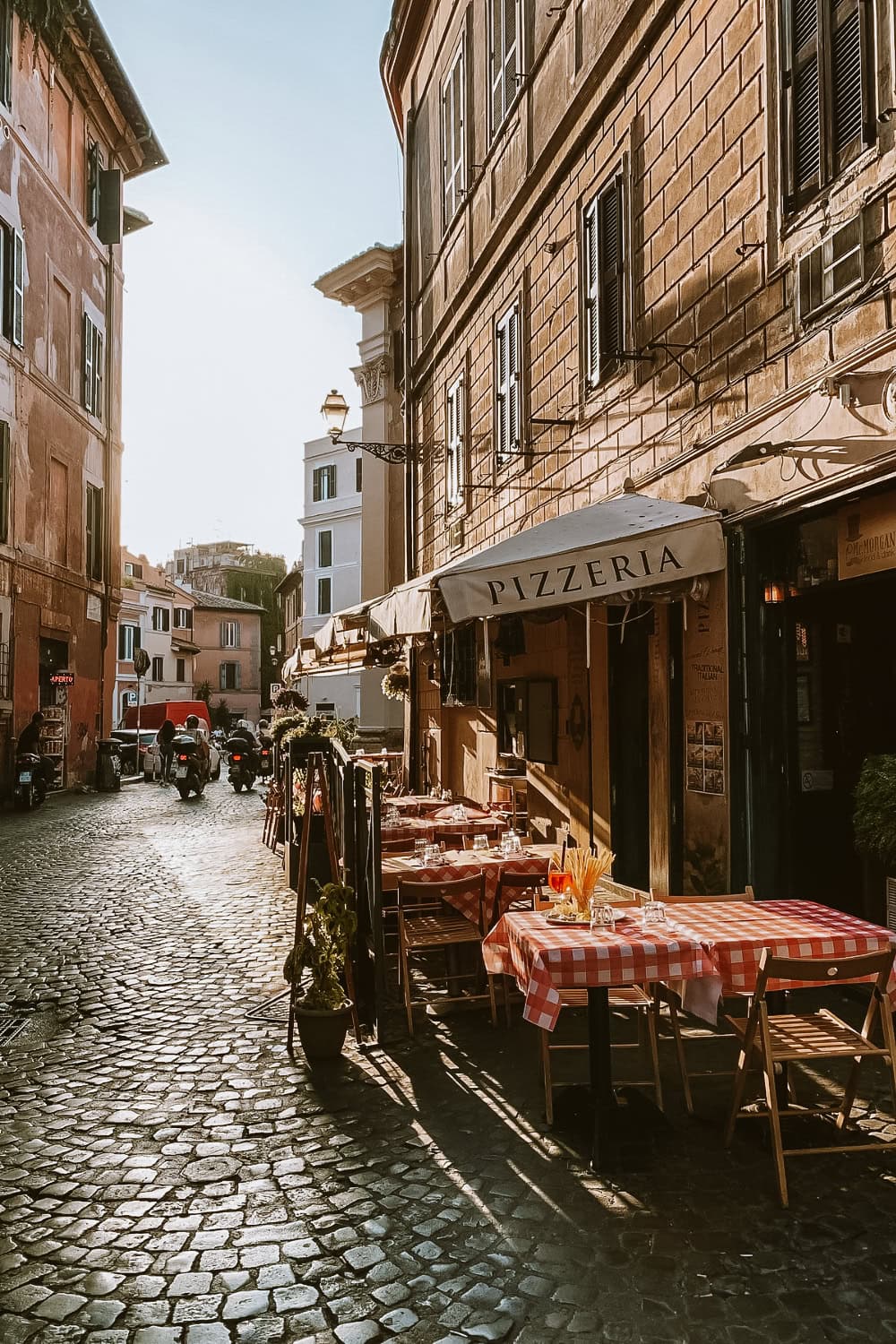
About 20–25 minutes west of the Colosseum, across the river, lies the Trastevere district. You’ll find plenty of great options here, but it’s still a good idea to check reviews — there are some tourist traps even in this area.
We personally loved the Monti neighbourhood, which doesn’t get much attention but is definitely worth exploring. It’s located in the city centre, just a short walk from the Colosseum, yet slightly off the main tourist trail. That makes it feel much more authentic than central Rome — and there are lots of great places to eat and drink.
In our other articles, you’ll find a city map with recommended restaurants and bakeries — not just in Monti, but also in the centre and nearby areas.
Best Places to Visit Near the Colosseum
There’s plenty to explore around the Colosseum, and a few places are genuinely worth the short walk.
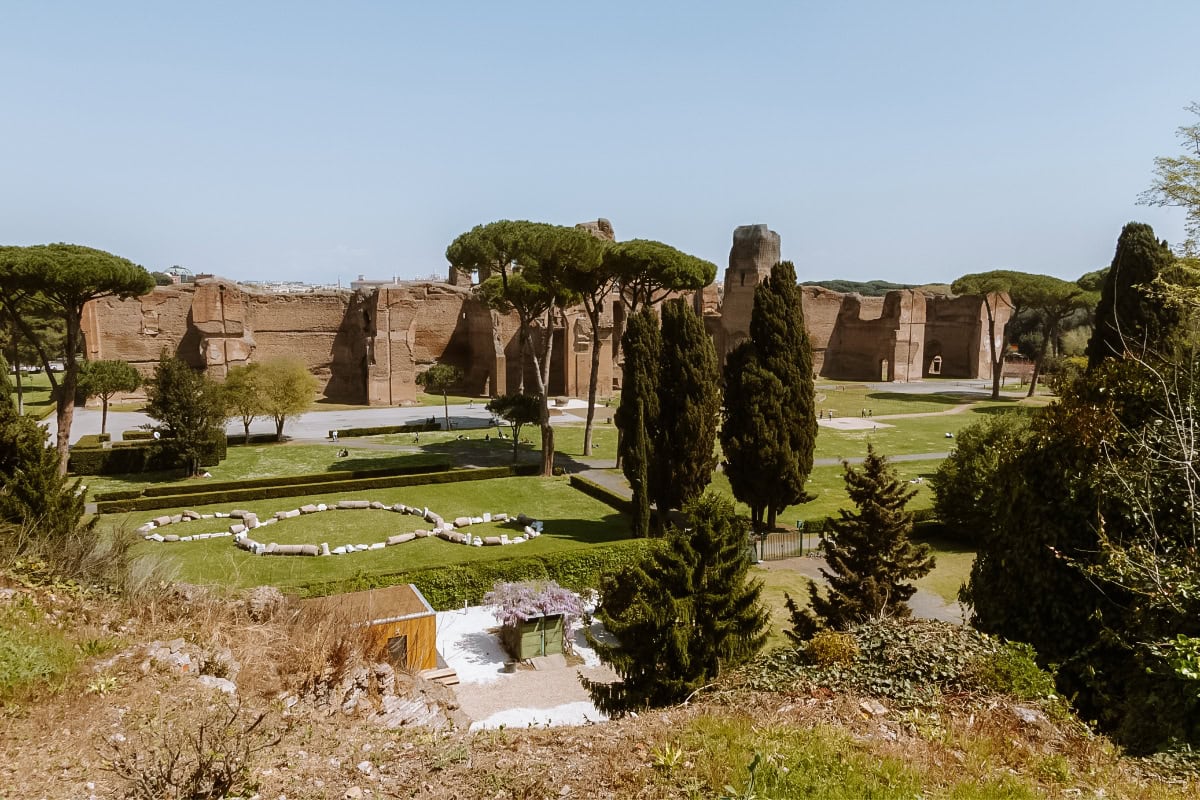
One of them is the Baths of Caracalla (first photo below), built by Emperor Caracalla between 212 and 216 AD. They were among the largest and most impressive bath complexes of the ancient world.
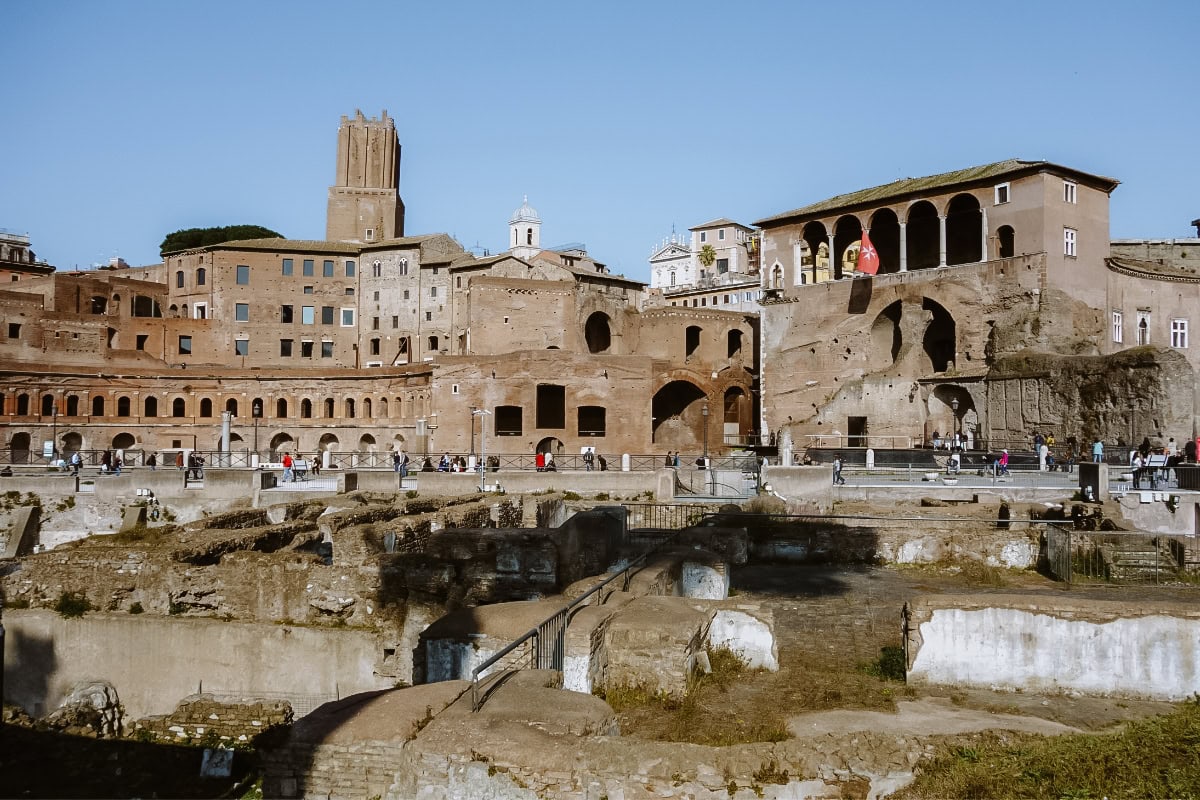
The second photo shows Trajan’s Market, often considered the world’s first “shopping mall”. It once had six levels and around 150 different shops and apartments.
Another great place is the Capitoline Museums, one of Rome’s best art museums. Here you can admire an outstanding collection of sculptures, paintings and artefacts closely tied to the city’s history. Along with the Vatican Museums and the Borghese Gallery, it’s easily one of the must-sees for anyone who loves art.
And don’t miss the square outside — a perfectly oval piazza designed by Michelangelo himself. From here, you also get a beautiful view of the Roman Forum with the Colosseum rising just behind it.
Booking Tickets for Rome’s Attractions
On our own trips, we learned one thing very quickly: without reservations, you often won’t get in at all. Tickets sell out weeks in advance, and the queues can easily eat up half your morning. That’s why we only share booking links we personally use and trust.
Tickets we strongly recommend booking in advance:
- Ticket to the Vatican Museums + Sistine Chapel
- Colosseum, Forum, Palatine Hill + audio guide (skip-the-line)
- Ticket to Castel Sant’Angelo
- Pantheon skip-the-line ticket
- Ticket to the Borghese Gallery
That’s our complete guide to visiting the Colosseum. If you have a question, feel free to ask in the comments below — we’re happy to help. Have a great trip!
More Information About Rome
If you’re planning a trip to Rome, here are some of our other guides that will make your visit easier — and help you enjoy the city to the fullest:
- Rome Travel Guide — transport tips, food, prices and practical insights from our own trips
- Rome Itinerary: 3 Days — a day-by-day plan covering all the essential sights
- Rome in 1 Day — what to see if you only have a few hours in the city
- Where to Stay in Rome — the best neighbourhoods and hotels for every budget + map
- Vatican Museums & Sistine Chapel — what not to miss and how to avoid the lines
- Colosseum & Ancient Rome — tickets, opening hours and tips for your visit
- Best Museums in Rome — from the Capitoline Museums to the Borghese Gallery
- How to Save Money in Rome — tourist passes, cheap entrances and transport tips
- How to Get From Fiumicino Airport to Rome — all transport options explained clearly
FAQ – Colosseum in Rome